Newborn & Baby Care
Baby Bath Tub: The Complete Guide
Types, features, safety essentials, and a simple step-by-step routine for stress-free bath times.

A baby bath tub turns one of the trickier parts of early parenting into a calm, predictable routine. The right tub keeps your baby supported and warm, saves your back, and takes a lot of the nervousness out of those first slippery bath times. This complete guide walks through whether you need one, the main types, what to look for, how to bathe your baby safely, and which style suits each stage from newborn through toddler.
Do you actually need a baby bath tub?
You can bathe a newborn without a dedicated tub, but most parents find one genuinely useful. A baby bath tub gives a small, contained space that supports your baby at the right angle, holds a sensible amount of water, and lets you keep both hands free for washing rather than for holding a wriggling, soapy infant upright in a large adult bath.
The main alternatives are lining a clean sink with a soft towel or support, or using a bath support inside the family bathtub. These work, but a purpose-built tub is usually easier to control for water depth and temperature, and it reduces the amount of bending you do over a full-size bath.
- Newborn to sitting: a tub with a built-in newborn incline or a separate insert offers the most support.
- Small homes: collapsible or foldable tubs store flat and travel well.
- Older babies: once your baby sits confidently, a simple tub or a non-slip seat may be all you need.
If you are still building your list of first purchases, a tub sits alongside the other core items in our guide to essentials for newborns. You can browse current options with a quick baby bath tub search on Amazon .
Types of baby bath tubs
Baby tubs come in a handful of formats, and the best one depends on your bathroom, your storage space, and your baby's stage. The table below sums up the common styles so you can match one to your situation at a glance.
| Tub style | Best for | Notable features | What to watch | Where to buy |
|---|---|---|---|---|
| Classic moulded tub | Budget-minded families, sinks and worktops | Single rigid basin, often with a contoured newborn area | Bulky to store; may outlast usefulness quickly | Check price |
| Convertible / stage-based tub | Buying once for the whole first year | Repositions or removes an insert as baby grows | Largest footprint of the group | Check price |
| Foldable / collapsible tub | Small bathrooms and travel | Silicone or plastic, folds nearly flat | Check hinges for water and mould | Check price |
| Bath support / sling | Using an existing tub or sink | Mesh or foam cradle, minimal storage | A support, not a tub; never left unattended | Check price |
| Bucket-style tub | Newborns soothed by a curled position | Deep, upright, womb-like posture | Narrow use window; deeper water needs care | Check price |
Tip: If you are short on storage, a foldable tub or a bath support is usually the most practical choice. If you want maximum newborn support and do not mind the bulk, a convertible tub tends to last longest across the first year.
What to look for when choosing
Once you have a style in mind, compare tubs on the practical features that make bath time easier and safer. Focus on the following:
- Newborn support: a contoured incline, sling or bump keeps a floppy newborn's head above the water without you holding all the weight.
- Non-slip surfaces: a textured interior and rubber feet stop the tub and the baby from sliding.
- Drainage: a drain plug at the bottom saves you lifting and tipping a heavy tub of water.
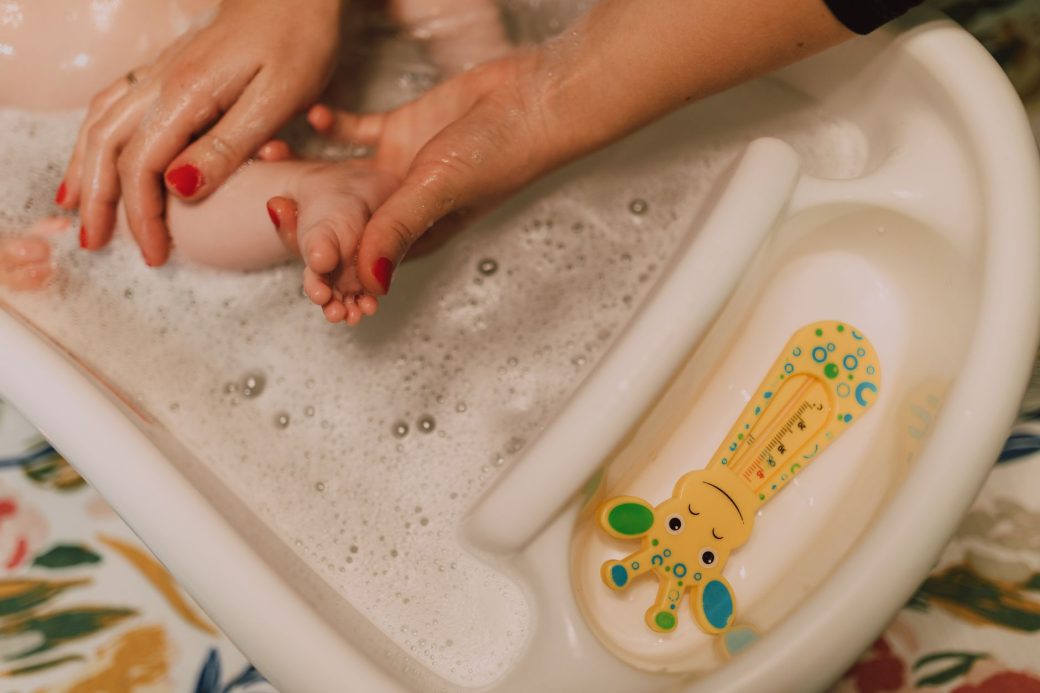
- Temperature cues: some tubs include a colour-changing strip that warns when water is too hot, though a thermometer or your own elbow is just as reliable.
- Size and fit: check the tub fits across your bath, in your shower tray or on a chosen surface before you buy.
- Materials: look for sturdy, easy-to-clean plastic or food-grade silicone that resists mould.
Price ranges vary widely. Basic moulded tubs and simple supports sit at the budget end, foldable and convertible tubs occupy the mid range, and larger stage-based systems with stands or spa features reach the higher tier. A mid-range tub is plenty for most families; spend more only if a specific feature, such as a stand that saves your back, genuinely matters to you. A pair of soft hooded baby towels and a supply of baby wipes round out the bathing kit nicely.
Bath tub safety essentials
No bath tub, support or seat is a substitute for your hands and full attention. The single most important rule of bathing a baby is constant, arm's-length supervision. Drowning can happen silently and in a very small amount of water, which is why safety bodies stress that a baby is never left alone near a bath, even for a few seconds.
- Never leave your baby alone in or near water, not even for a moment. Babies can slip under the surface silently and in very shallow water.
- Check the water temperature before your baby goes in. Aim for comfortably warm, and always test it with your wrist or elbow, or a thermometer.
- Keep water shallow. A few inches is enough for a small baby; you are washing, not swimming.
- Fill and empty the tub before and after, so a full tub is never left standing where a mobile baby could reach it.
- Run cold water first, then add warm, to avoid a scalding hot start, and turn taps fully off.
- Treat bath seats and supports as convenience items, not safety devices. They can tip, so they never replace your hold and gaze.
Tip: This article is general information, not medical advice. If your baby has a skin condition, was born prematurely, or you have any concerns about bathing, ask your pediatrician or health visitor for guidance tailored to your child.
How to bathe your baby step by step
A simple, repeatable routine makes bath time smoother for everyone. Before you start, gather everything within reach: towel, clean nappy, clothes, and any wash you use. Once your baby is in the water, you should not have to step away.
- Prepare the room: warm and draught-free, with the water tested and shallow.
- Lower your baby in feet first, supporting the head and neck the whole time.
- Wash gently with your hand or a soft cloth, working from the cleanest areas to the nappy area last.
- Keep it short: five to ten minutes is plenty, as long baths can dry delicate skin.
- Lift out and wrap straight into a warm towel, patting rather than rubbing dry, and drying skin folds well.
In the very early days, before the umbilical cord stump heals, many parents stick to sponge or top-and-tail cleaning rather than full baths. Follow the advice your midwife or health visitor gives for your baby's stage.

Choosing by age and stage
Your baby's needs change quickly in the first year, and the tub that suits a newborn may feel too small by the time they sit up. Matching the tub to the stage keeps bath time comfortable.
- Newborn (0 to 3 months): prioritise a reclined, well-supported position that keeps the head clear of the water.
- Sitting up (around 6 months): a flatter tub with a non-slip base and a bit more room works well.
- Confident sitter to toddler: you may move to a simple tub, a non-slip seat, or the family bath with a slip mat.
If you would rather buy once, a convertible tub that adjusts across these stages can carry you through most of the first year and beyond. Parents comparing the newborn stage often also read our infant bath tub guide and our overview of the newborn stage.
Cleaning and caring for the tub
A warm, damp tub is exactly the environment mould and mildew like, so a little upkeep keeps it fresh and hygienic.
- Empty and dry it fully after every bath, standing it on its side or hanging it to drain.
- Wipe down regularly with mild soap and water, paying attention to seams and crevices.
- Check foldable tubs along their hinges and folds, where water can hide.
- Inspect supports and slings for wear, and replace them if the fabric or foam degrades.
Baby bath tub FAQs
A few questions come up again and again from new parents, so here are short, practical answers.
- How often should I bath my baby? Newborns do not get very dirty, so two or three baths a week is usually plenty, with daily top-and-tail cleaning of the face, neck, hands and nappy area in between. Bathing too often can dry delicate skin.
- What water temperature is right? Comfortably warm, never hot. Test it with your wrist or elbow, or use a thermometer, and always run cold water into the tub first.
- How much water do I need? Only a few inches for a small baby. You are washing gently, not filling a deep bath, and shallow water is safer.
- Do I need special baby wash? Plain water is fine for a newborn. If you use a cleanser, choose a mild, fragrance-free one made for babies, and use it sparingly.
- When can my baby move to the big bath? Many families make the switch once their baby sits confidently and outgrows the tub, using a non-slip mat and shallow water. There is no fixed date; go by your baby's stability and comfort.
- Are bath seats safe? Bath seats and supports are convenience items, not safety devices. They can tip, so they never replace your hands or your constant supervision.
A baby bath tub is one of those small purchases that quietly makes the early months easier. Pick the style that fits your space and your baby's stage, keep safety and supervision front of mind, and bath time can become one of the calmest parts of your day. When you are ready, compare current baby bath tubs on Amazon and match one to the style that fits your home.
Sources and further reading:
- American Academy of Pediatrics (HealthyChildren.org) for bathing and water-safety guidance.
- NHS for advice on washing and bathing a baby.
- U.S. Consumer Product Safety Commission (CPSC) for bath-seat and drowning-prevention safety alerts.
Have a question or a topic to suggest?
We read every message. Tell us what you would like to see next on the blog.
Get in touchYou may also like
Infant Bath Tub: The Complete Guide
Whether you need an infant bath tub, the main types and features to compare, the bath safety rules that truly matter, and a simple step-by-step routine to bathe your baby calmly through every stage.

Baby Wipes: The Complete Guide
A practical guide to baby wipes: the main types, what to look for on the label, how to use them gently and safely, and greener choices for nappy changes and beyond.

Newborn: The Complete Guide
What newborns are really like and how to care for one: feeding and safe sleep basics, nappy and skin care, soothing a crying baby, the essentials you truly need, and the signs that mean it is time to call your doctor.