Complete Guide
Baby Gym: The Complete Guide
What a play gym is, its developmental benefits, safe use and how to get more play out of it by stage.
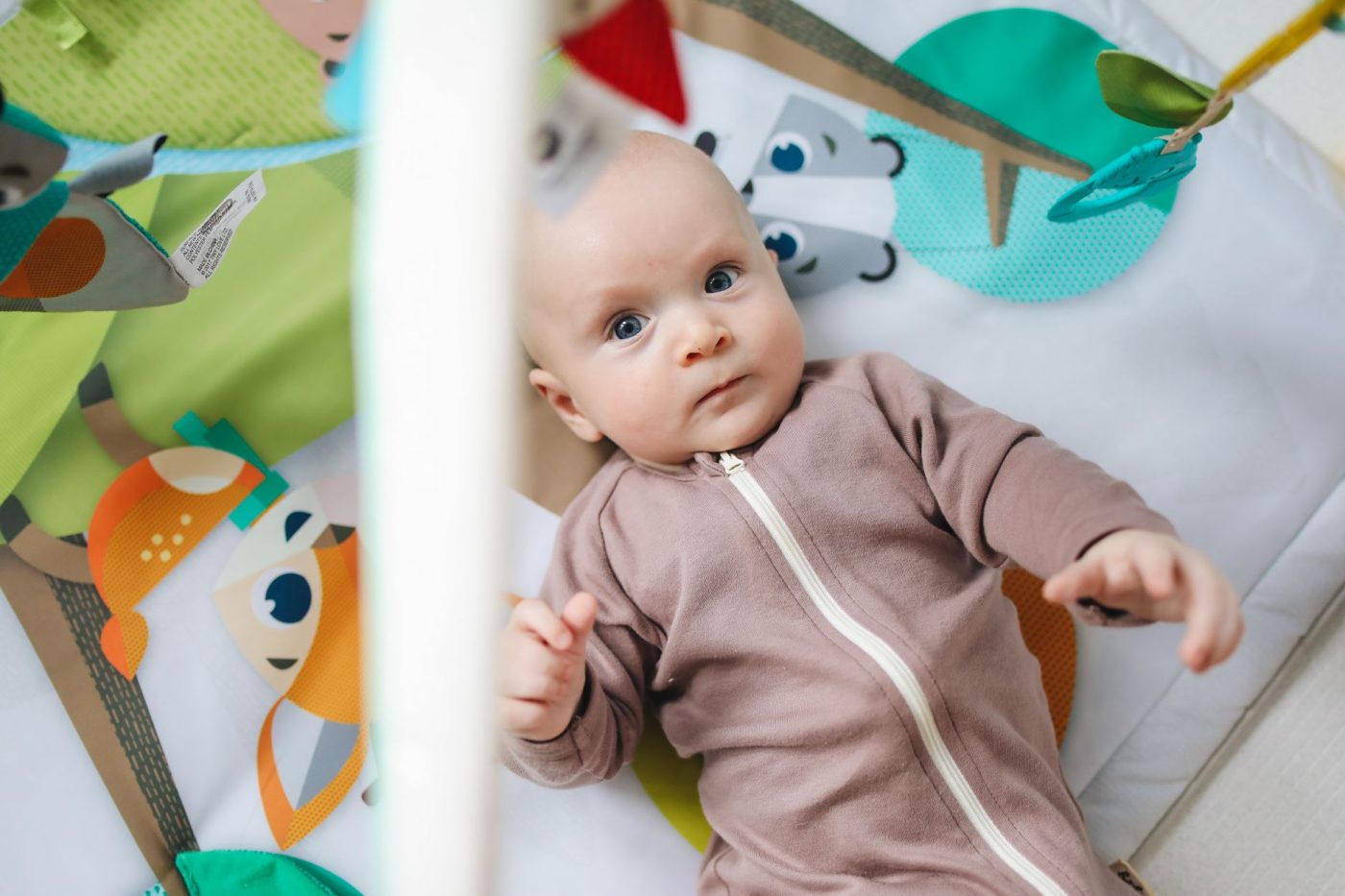
A baby gym, sometimes called a play gym or activity gym, is a padded mat with an overhead arch of dangling toys. It is one of the first pieces of play equipment most babies use, and it does a lot of quiet developmental work: encouraging reaching, batting, tracking, and eventually rolling. This complete guide explains what a baby gym is, the benefits it offers, what to look for, a comparison of popular models by budget, and how to use it safely from the newborn weeks onward.
Babiespedia is reader-supported. When you buy through links on our site we may earn a small commission, at no extra cost to you. We only feature products we believe parents will find genuinely useful.
What a baby gym is and why it helps
At its simplest, a baby gym gives your baby a safe, cushioned place to lie and a set of toys placed just within reach. That combination invites exactly the kind of movement and focus a young baby is working on, without any batteries or screens required.
- It builds motor skills. Reaching for and batting at hanging toys strengthens the arms, shoulders, and core.
- It supports vision. High-contrast shapes and gentle movement give newborns something to track and focus on.
- It encourages tummy time. Many gyms include a prop pillow and a mirror to make short tummy sessions more inviting.
- It buys you a moment. A safe, engaging spot lets you set your baby down for a few minutes with confidence.
Popular baby gyms compared
Here is a side-by-side of widely used baby gyms across every budget. Price tiers are general guidance, since actual prices shift by region and retailer. Choose based on how long you want it to last and how much you value extras like sound, lights, or a convertible design.
| Product | Best for | Notable features | Price tier | Where to buy |
|---|---|---|---|---|
| Fisher-Price Deluxe Kick & Play Piano Gym | Growing with your baby | Converts from play mat to seated piano, lights and sounds, high-contrast arches | Mid-range | Check price |
| Skip Hop Silver Lining Cloud Activity Gym | A stylish, neutral nursery look | Plush toys, baby-safe mirror, contrast patterns, machine-washable mat | Mid-range | Check price |
| Tiny Love Gymini Deluxe | Flexible, adjustable arches | Adjustable arches, dozens of activities, folds for travel | Mid-range | Check price |
| Bright Starts Tummy Time Prop & Play | Tummy time on a budget | Prop pillow, self-discovery mirror, lightweight and portable | Budget | Check price |
| Infantino 4-in-1 Jumbo Gym | Extended use into toddler play | Oversized mat, converts to play zone, plentiful hanging toys | Budget | Check price |
| Lovevery The Play Gym | Montessori-style, stage-based play | Organic-cotton mat, developmental stage cards, wooden pieces, batting toys | Premium | Check price |
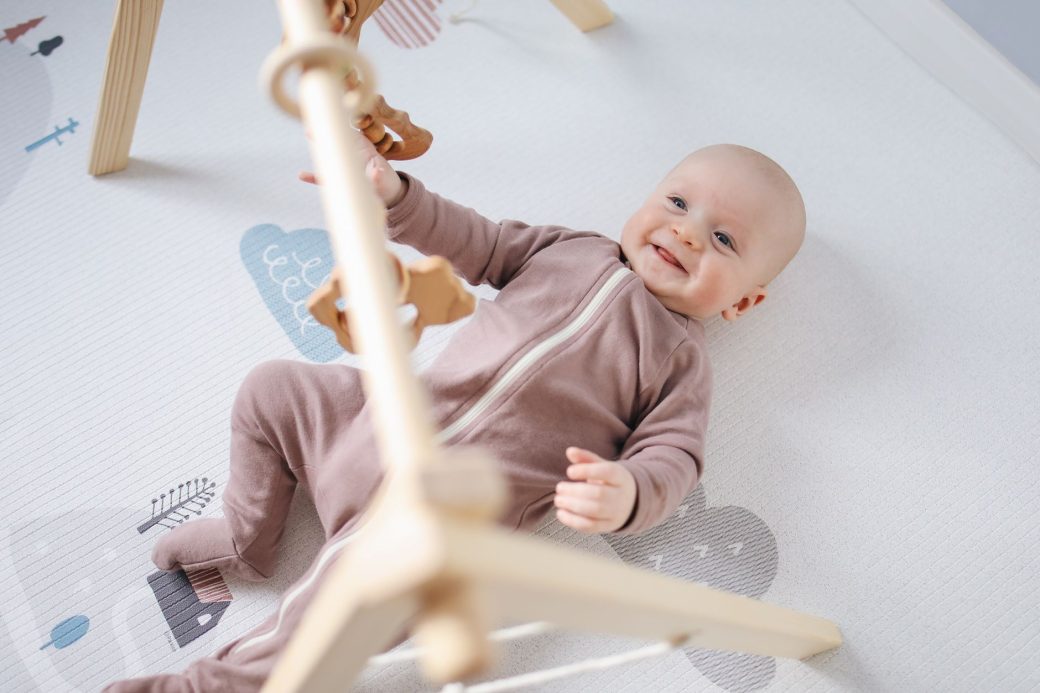
What to look for when buying
Baby gyms look similar on the shelf, but a few features separate one you keep using for months from one that gets shoved in a cupboard. Focus on the practical details.
- A thick, washable mat. More padding is kinder for tummy time, and a removable, machine-washable cover survives spit-up and drool.
- Adjustable or removable toys. Toys you can reposition or clip elsewhere keep the gym interesting and useful beyond the mat.
- High-contrast and varied textures. Bold patterns suit newborn vision, while crinkle, rattle, and mirror elements reward older babies.
- A convertible design. Gyms that fold flat, add a seated mode, or open into a larger play zone stretch the value.
- Sturdy, stable arches. Arches should hold their shape and not tip when a baby bats at the toys.
Tip: You do not need lights and music for a gym to work. Simple, high-contrast toys and your own face and voice do the most for a young baby. Save the battery-heavy features for when your baby is old enough to enjoy cause-and-effect play.
How to use a baby gym safely
A baby gym is designed for supervised, awake play on the floor, never for sleep. Following a few simple rules keeps play safe and productive.
- Always supervise. Stay within arm's reach and keep play sessions to times when your baby is awake and content.
- Never for sleep. If your baby dozes off, move them to a firm, flat sleep surface such as a bassinet or cot.
- Place it on the floor. Use a gym only at floor level, never on a raised surface a baby could roll off.
- Check the toys. Make sure hanging toys are securely attached with no small parts that could come loose.
- Mix in tummy time. Alternate back play with short, supervised tummy sessions to build neck and shoulder strength.
For more on floor play surfaces, our baby play mat guide and newborn play mat guide cover the softer, open-mat options that pair well with a gym.
Getting the most out of it by stage
A baby gym earns its keep because it grows with your baby. What your little one does under the arch changes month by month, and small tweaks keep it engaging.
- 0 to 2 months: newborns mostly look and track. Position one or two high-contrast toys directly above and let them focus.
- 2 to 4 months: swiping and batting begin. Lower the toys slightly so your baby can make contact and learn cause and effect.
- 4 to 6 months: grabbing and rolling take over. Add graspable and crinkle toys, and use the mat for supervised rolling practice.
- 6 months and up: sitting and exploring. Detach the toys for independent play, or switch to a seated or convertible mode if the gym offers one.
The American Academy of Pediatrics and the World Health Organization both emphasize plenty of supervised floor play and interaction as a driver of early development, and a baby gym is a simple way to build that into the day.
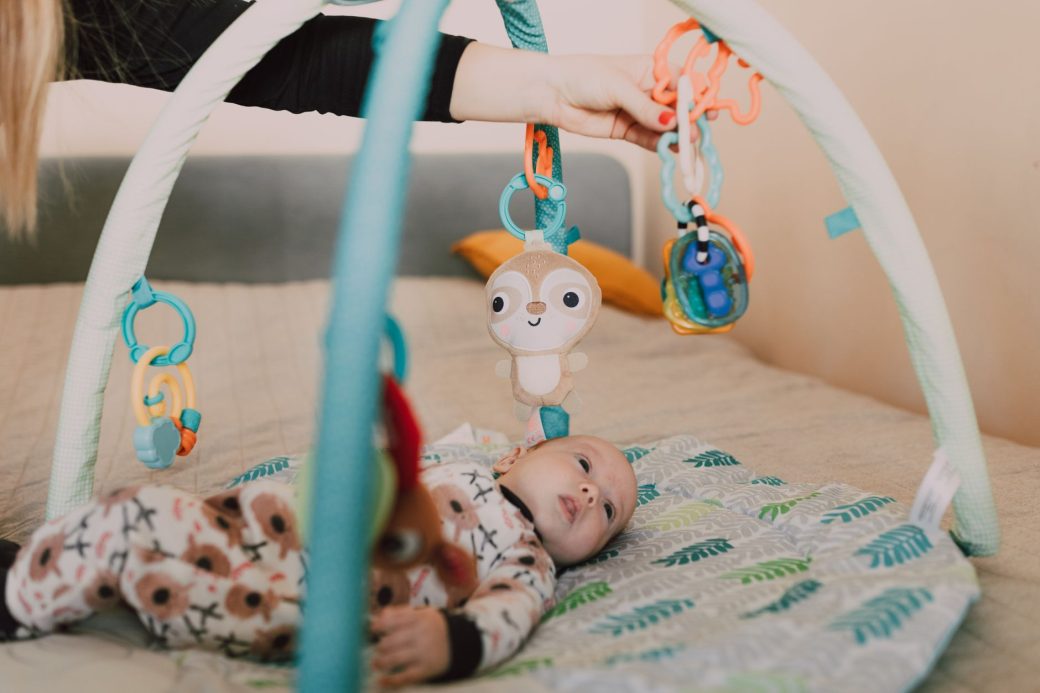
Price tiers and what to expect
Baby gyms span a wide range, but a modest one does the core job well. Treat these as general brackets that shift with region and retailer.
- Budget: simple mat-and-arch sets with a handful of hanging toys. Great value for the newborn months.
- Mid range: convertible gyms with lights, sound, removable toys, and washable mats. The sweet spot for durability and repeat use.
- Premium: organic materials, stage-based developmental systems, and heirloom-quality designs meant to last across children.
You can browse current baby gyms on Amazon to compare options, and our best baby toys guide covers what to add as your baby outgrows the arch.
How to choose for your family
With the basics covered, narrow your choice by thinking about your own home and habits rather than the marketing on the box.
- Short on space? Choose a gym that folds flat or doubles as a general play mat.
- Want fewer batteries? Pick a simple mat-and-arch design and rely on contrast, texture, and your interaction.
- Planning for more children? A well-made, washable gym in neutral colors passes down easily.
- Focused on development? A stage-based system with guidance can help you match play to your baby's current skills.
Tip: This is general information to support play and development, not medical advice. If you have concerns about your baby's movement or milestones, check with your pediatrician or health visitor.
A good baby gym is one of the highest-value early purchases: affordable, screen-free, and genuinely useful from the first weeks. Pick one with a comfortable mat and engaging toys, use it for supervised floor play, and let it grow with your baby. For more play and development guides, browse the Babiespedia blog.
Sources and further reading
Have a question or a topic to suggest?
We read every message. Tell us what you would like to see next on the blog.
Get in touchYou may also like
Baby Play Mat: The Complete Guide
Why a baby play mat matters, the main types, what to look for, and how to use it safely to support tummy time, rolling, and crawling through the first year.
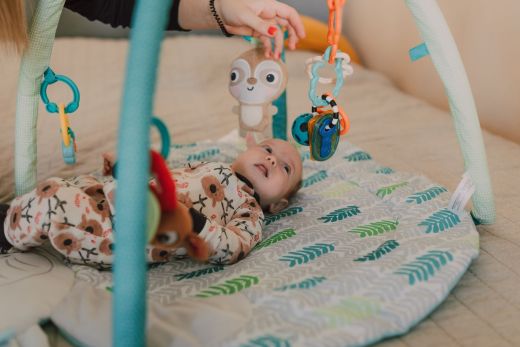
Newborn Play Mat: The Complete Guide
What a newborn play mat is really for, how it supports vision, motor skills and tummy time, which features to look for, and how to use one safely so early floor time truly helps your baby grow.
Best Baby Toys in 2026: Tested Picks by Budget
A practical buying guide to the best baby toys: what to look for, safety standards, how to choose by age and stage, and what your money buys at each price tier.