Complete Guide
Newborn Play Mat: The Complete Guide
More than a padded rug: how a play mat supports development and tummy time, and how to choose and use one safely.
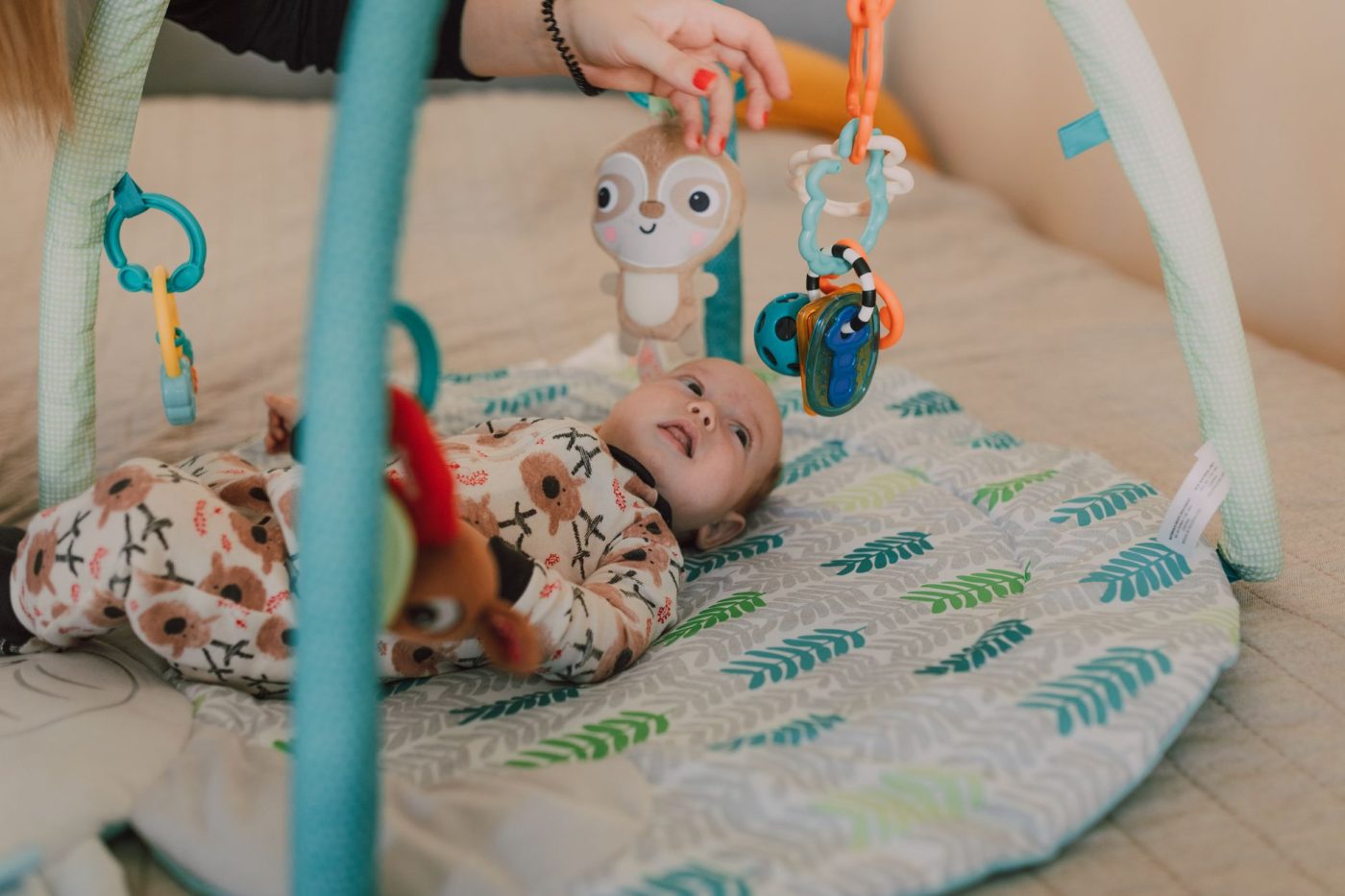
A newborn play mat is one of the few pieces of baby gear that earns its keep from week one. It gives a young baby a safe, padded place for supervised tummy time, gentle back play and early sensory discovery, while giving you a moment with both hands free. This complete guide explains what a play mat does, how to use it safely, which features matter, and which well known mats are worth comparing.
Babiespedia is reader-supported. When you buy through links on our site we may earn a small commission, at no extra cost to you. We only feature products we believe parents will find genuinely useful.
What a newborn play mat actually does
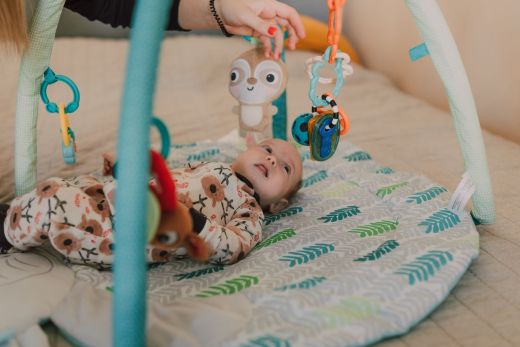
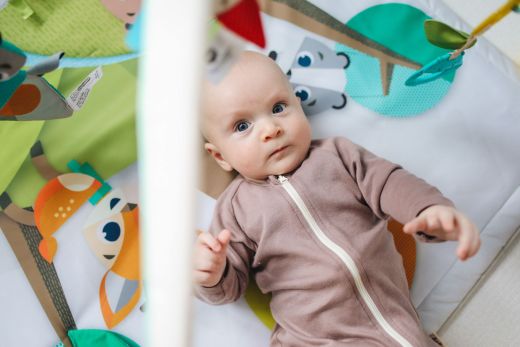
A play mat, sometimes called an activity gym, is a padded mat with an arch or two overhead from which toys, mirrors and rattles hang. For a newborn it is less about "play" and more about safe positioning and gentle stimulation.
- A safe surface for supervised time on the floor, away from sofas and beds where a baby could roll off.
- A tummy-time base that builds neck, shoulder and core strength from the early weeks.
- Gentle sensory input from high-contrast toys, a baby-safe mirror and soft sounds.
Newborns cannot reach or grasp at first, so the early value is visual and postural. As your baby grows, the same mat supports batting, reaching and rolling, which is why a good one lasts many months.
Using a play mat safely
A play mat is a supervised, awake-time product, never a sleep space. Keeping a few rules in mind makes it one of the safest places for floor play.
- Always supervise. A play mat is for awake, watched play, not for naps.
- Never let a baby sleep on it. If your baby dozes off, move them to a firm, flat cot or bassinet on their back.
- Place it on the floor, not on a raised surface a baby could roll from.
- Check hanging toys are securely attached with no loose parts or long cords.
- Keep tummy time short and frequent at first, building up as your baby gets stronger.
Tip: Safe-sleep rules still apply. The American Academy of Pediatrics is clear that babies should sleep alone, on their back, on a firm flat surface, never on a padded play mat or inclined seat.
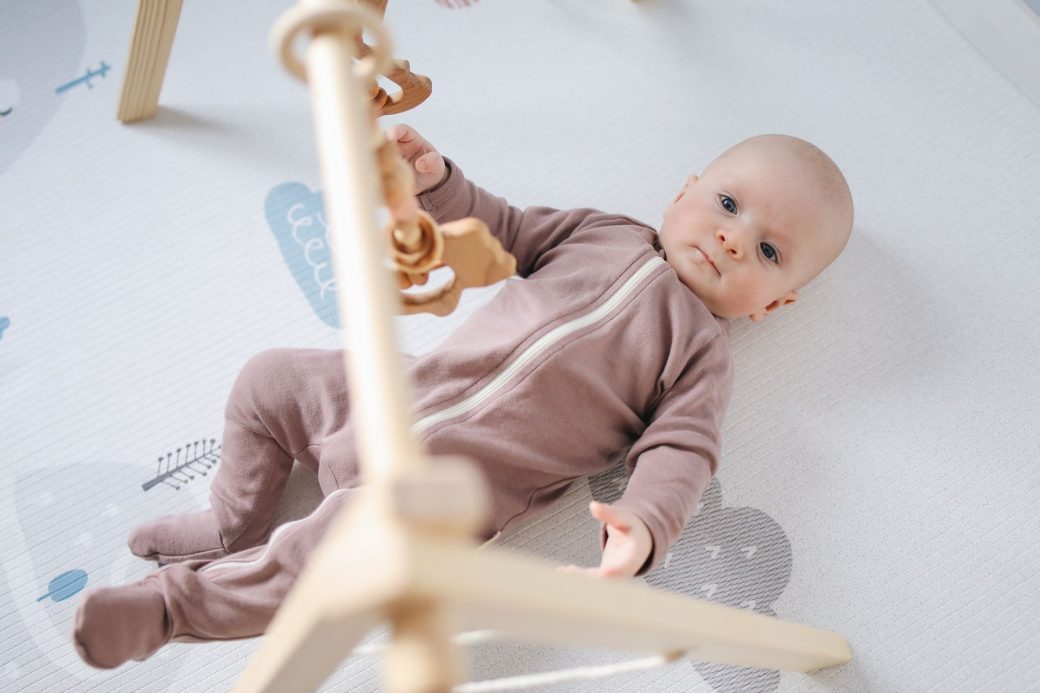
Play mats and tummy time
Tummy time is the supervised practice of placing your baby on their front while awake, and it is one of the most important early activities for physical development. A play mat makes it more comfortable and more engaging.
- Start early and small. A few minutes a few times a day is plenty at first.
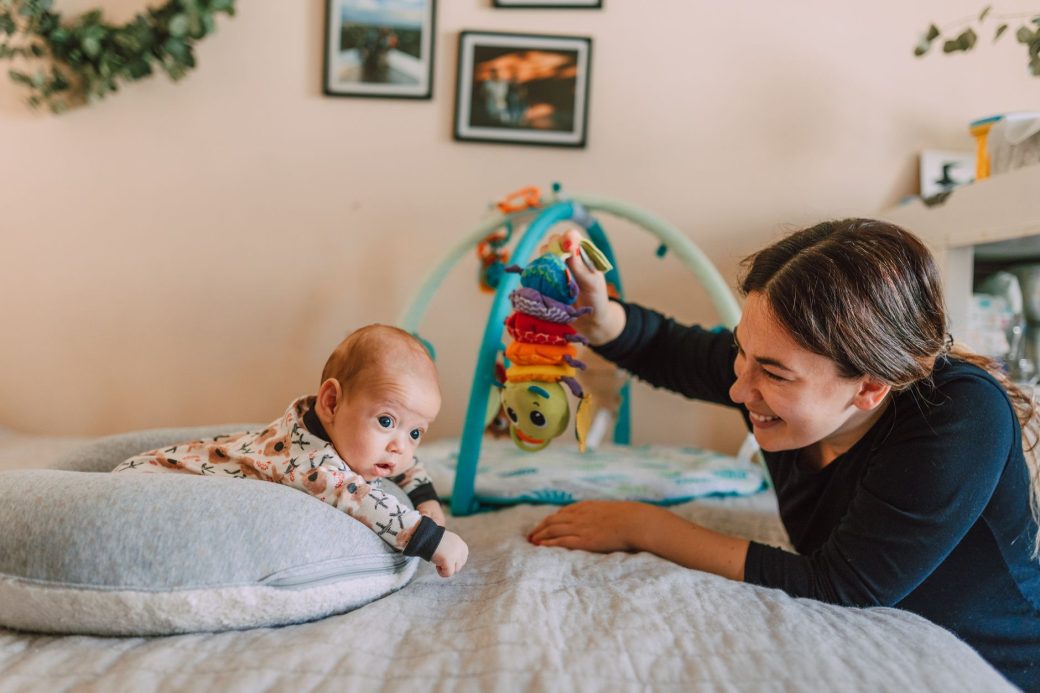
- Get down to their level. Your face is the most motivating "toy" a newborn has.
- Use a mirror or high-contrast toy at eye level to encourage head lifting.
- Build up gradually as neck and shoulder strength improve.
Tummy time helps prevent flat spots on the head and builds the strength a baby needs for rolling, sitting and crawling. Our baby gym guide and infant play mat guide go further on developmental play.
Features that matter when choosing
Play mats vary from simple padded gyms to elaborate developmental systems. These are the features worth weighing.
- Padding and size. Enough cushioning for a hard floor and enough room for a growing baby to stretch and roll.
- Washable fabric. Mats attract spit-up and drool, so a machine-washable cover is a real convenience.
- Adjustable, detachable toys. Toys you can reposition or remove keep the mat interesting and easy to clean.
- High-contrast and sensory elements. Bold patterns, a mirror and varied textures suit a newborn's developing vision.
- Longevity. Some mats convert into a ball pit or fort, stretching their useful life well past the newborn stage.
Popular newborn play mats compared
The mats below are widely used and well reviewed, from budget classics to premium developmental systems. Prices shift with sales, so we describe each by tier rather than a fixed number. Match the mat to your budget and how much you value staged, developmental design.
| Product | Best for | Notable features | Price tier | Where to buy |
|---|---|---|---|---|
| Lovevery The Play Gym | Staged development | Zones that change by age, wooden and high-contrast toys, teething accessories | Premium | Check price |
| Skip Hop Silver Lining Cloud Gym | Design and comfort | Plush mat, tummy-time pillow, hanging toys and a mirror | Mid-range | Check price |
| Fisher-Price Deluxe Kick & Play Piano Gym | Interactive fun | Kick-activated piano with lights and sounds, grows to floor toy | Mid-range | Check price |
| Infantino 4-in-1 Grow With Me Gym | Value and longevity | Converts to a ball pit, adjustable arches, budget-friendly | Budget | Check price |
| Tiny Love Meadow Days Gymini | A classic activity gym | Adjustable arches, many hanging toys, mirror and textures | Mid-range | Check price |
| Bright Starts Ocean Discovery Gym | Sensory play on a budget | Music, lights, mirror and varied textures at a low price | Budget | Check price |
If you want maximum longevity on a budget, a convertible mat like the Infantino Grow With Me gym stretches well past the newborn months. To compare the wider category, see our baby play mat guide.
Getting the most from a play mat
A play mat is only as valuable as the interaction around it. A few habits turn it from a place to park a baby into a genuine development aid.
- Rotate the toys so the same rattles and mirrors stay interesting.
- Talk and sing while your baby plays; your voice is a powerful stimulus.
- Vary the position, alternating back play and short tummy time.
- Follow their cues. A fussing baby has usually had enough; end on a happy note.
Newborns tire quickly, so short, frequent sessions beat one long stretch. As your baby grows, the mat naturally supports reaching, batting and rolling. Pair it with a few well chosen first toys from our newborn toys guide and baby toys guide.
Tip: This is general information, not medical advice. If you have concerns about your baby's movement, muscle tone or head shape, speak with your pediatrician or health visitor.
How to choose your play mat
Bring it together into a short checklist. A good newborn play mat should:
- Provide firm-floor padding and enough room for a growing baby.
- Have a washable cover and securely attached, adjustable toys.
- Offer high-contrast patterns, a mirror and varied textures for the senses.
- Fit your budget while offering enough longevity to last several months.
- Be used only for supervised, awake play, never for sleep.
Frequently asked questions
When can a newborn start using a play mat?
From the early weeks, for short, supervised sessions. At first the value is visual and postural: a safe padded surface for back play and gentle tummy time. As your baby grows, the same mat supports reaching, batting and rolling.
Can a baby sleep on a play mat?
No. A play mat is for supervised, awake play only. If your baby falls asleep, move them to a firm, flat cot or bassinet on their back. Padded, inclined or unsupervised surfaces are not safe for sleep.
How long should tummy time on a play mat be?
Start with just a few minutes a few times a day and build up as your baby gets stronger. Frequent short sessions work better than one long stretch, and getting down to your baby's level keeps them engaged.
Are expensive developmental play mats worth it?
They can be, if you value staged toys that change as your baby grows, but they are not essential. A simple, well padded gym with high-contrast toys and a mirror provides the same core benefits at a much lower price.
Whether you choose a simple budget gym or a staged developmental system, the mat matters less than the time you spend down there with your baby. For more first-year care and play guides, explore the newborn complete guide and the wider Babiespedia blog.
Sources and further reading: American Academy of Pediatrics (HealthyChildren.org), Centers for Disease Control and Prevention (developmental milestones).
Have a question or a topic to suggest?
We read every message. Tell us what you would like to see next on the blog.
Get in touchYou may also like
Baby Play Mat: The Complete Guide
Why a baby play mat matters, the main types, what to look for, and how to use it safely to support tummy time, rolling, and crawling through the first year.
Infant Play Mat: The Complete Guide
A calm, practical guide to infant play mats: what they do, the main types, what to look for, safe use, and how floor play supports your baby's development.
Baby Gym: The Complete Guide
A complete guide to baby gyms covering what a play gym is, its developmental benefits, what to look for, safe supervised use, and how to adapt it by stage to keep your baby engaged and learning.