Toys & Play
Best Baby Toys in 2026: Tested Picks by Budget
How to choose safe, engaging baby toys by age, stage and budget without overspending.
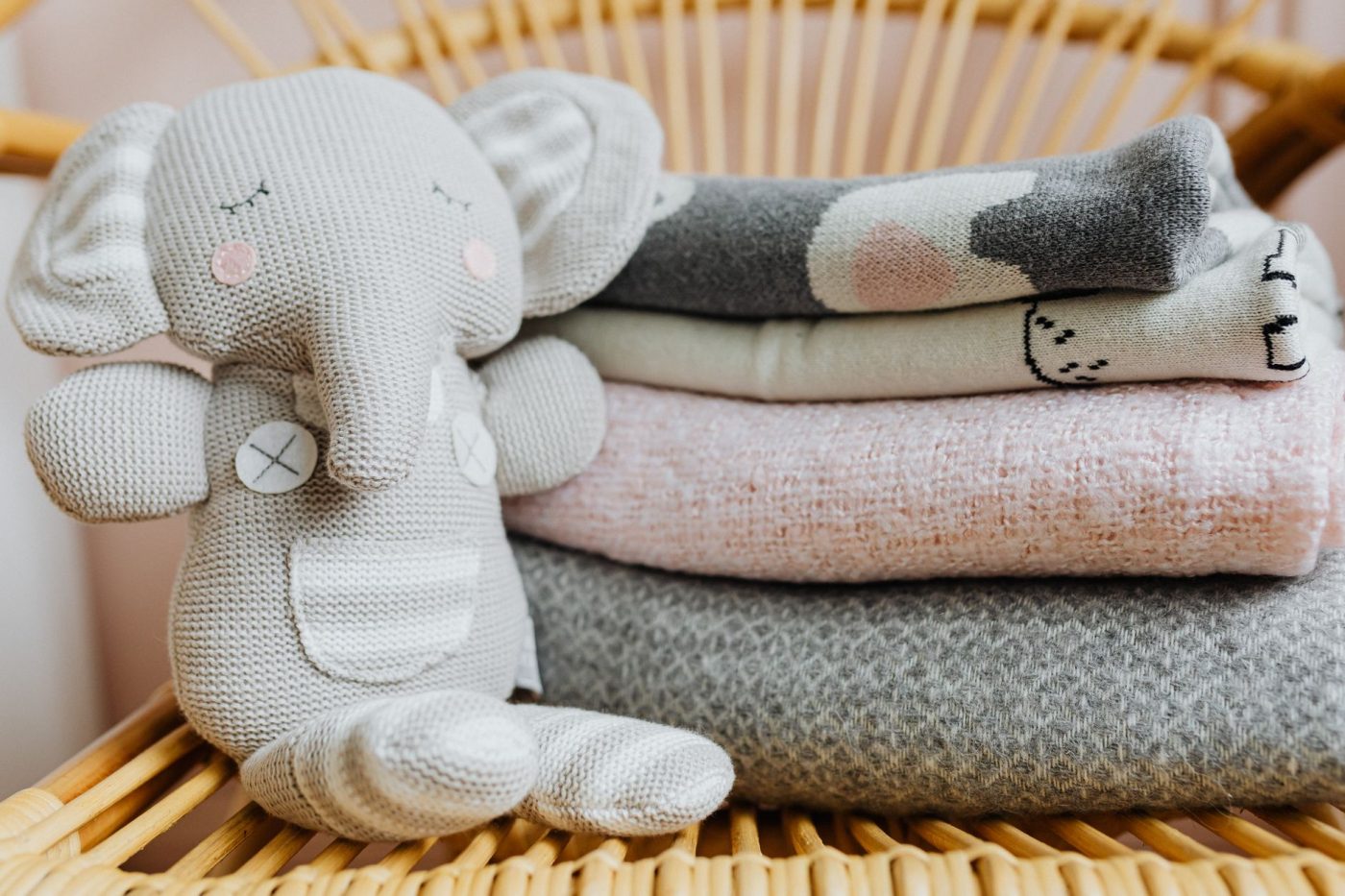
The best baby toy is rarely the loudest or the most expensive one. It is the one that matches your baby's stage, survives drool and dropping, and gives them something safe to explore. This guide ranks our favorite baby toys by budget, explains the safety marks that actually matter, and gives you a quick comparison table so you can shop with confidence instead of guessing in a crowded aisle.
Babiespedia is reader-supported. When you buy through links on our site we may earn a small commission, at no extra cost to you. We only feature products we believe parents will find genuinely useful.
How we chose these baby toys
Rather than chase the flashiest gadgets, we favored toys that show up again and again on pediatric and consumer safety lists, hold a child's interest across several months, and clean up easily. Every pick below meets recognized toy safety standards and comes from a brand with a long track record. We weighted four things heavily:
- Developmental value. Does the toy support a real skill, such as grasping, tracking, sitting, or cause and effect play?
- Open-ended use. Toys that can stack, nest, mouth, and roll grow with your baby and hold interest far longer than single-trick electronic toys.
- Durability and cleanability. Solid wood, food-grade silicone, and washable fabric age better than thin plastic that cracks.
- Safety record. Age grading, secure battery compartments, and no small parts for the under-three crowd.
Best baby toys at a glance
Here is a quick side-by-side of our favorites across every budget. Price tiers are general guidance, since actual prices shift by region and retailer.
| Product | Best for | Notable features | Price tier | Where to buy |
|---|---|---|---|---|
| Fisher-Price Deluxe Kick & Play Piano Gym | Newborn to sitting | Converts from play mat to seated piano, high-contrast arches | Mid-range | Check price |
| Lamaze Freddie the Firefly | 3 to 9 months | Crinkle wings, textures, clip-on rings, machine washable | Budget | Check price |
| Manhattan Toy Winkel | 0 to 6 months | Soft graspable tubes, built-in rattle, easy to hold and mouth | Budget | Check price |
| Sassy Stacks of Circles Ring Stacker | 6 to 12 months | Textured rings, wobble base, teaches size and stacking | Budget | Check price |
| Melissa & Doug Wooden Shape Sorting Cube | 12 months and up | Solid wood, chunky blocks, problem-solving and fine motor | Mid-range | Check price |
| Skip Hop Explore & More Baby's View Activity Center | Sitting to standing | Rotating seat, removable toys, converts as baby grows | Premium | Check price |
Safety standards and certifications
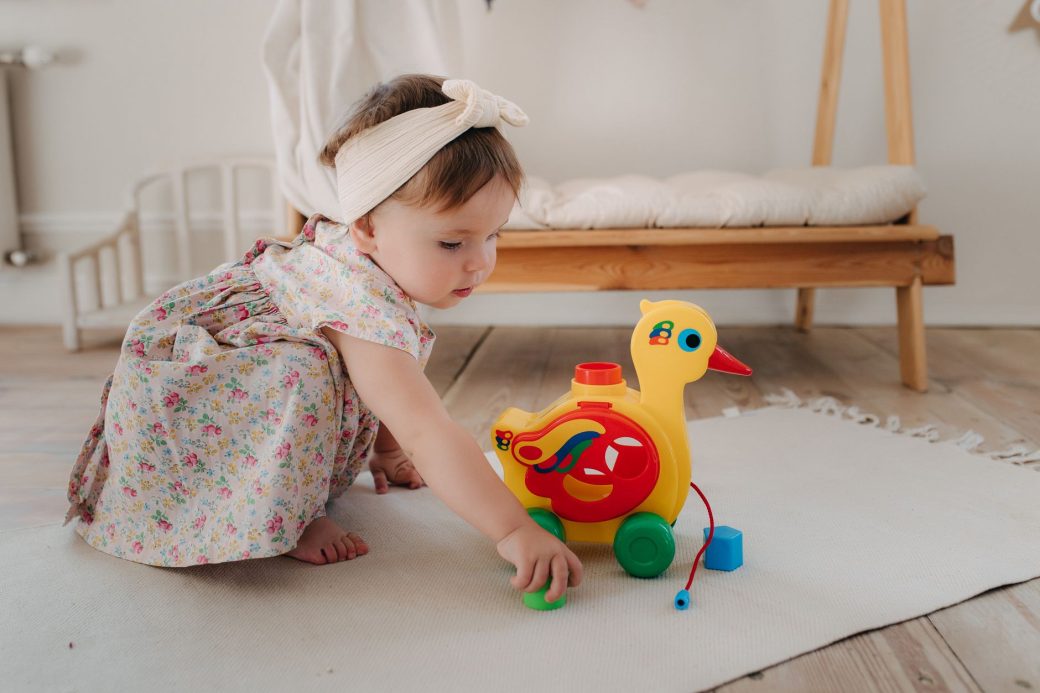
Toy safety is one area where you do not want to improvise. In the United States, look for toys that meet the ASTM F963 toy safety standard and comply with the Consumer Product Safety Improvement Act. In the UK and Europe, the UKCA and CE marks show the toy has been assessed against the relevant requirements. The the CPSC also publishes recall notices, which are worth a quick search before you buy a secondhand or unfamiliar toy.
- Watch the choking hazard. For babies under three, avoid small parts and anything that fits through a toilet paper tube.
- Check cords and strings. Anything longer than a short loop is a strangulation risk, especially near the crib.
- Prefer non-toxic finishes. Look for water-based paints and BPA-free, phthalate-free labeling on plastics and teethers.
- Mind button batteries and magnets. These are among the most dangerous items if swallowed. Choose toys with screw-secured battery compartments.
Tip: The age label on a toy is a safety recommendation, not a difficulty rating. A "3+" toy usually contains small parts that are a genuine choking risk for a younger baby, so take it seriously even when your little one seems ready for more.
Choosing toys by age and stage
The single most useful filter is your baby's developmental stage. Matching the toy to what your baby is learning to do makes play more engaging and cuts down on clutter. The American Academy of Pediatrics HealthyChildren site offers age-by-age play ideas that pair well with the toys below.
- 0 to 3 months. Newborns work on focus and tracking. High-contrast cards, a soft rattle, an unbreakable mirror, and an overhead play gym are plenty.
- 3 to 6 months. Grabbing and mouthing take over. Textured teethers, easy-grip rattles, crinkle books, and soft blocks suit this reach-and-explore phase.
- 6 to 12 months. Sitting, banging, and cause-and-effect. Stacking cups, nesting toys, activity cubes, and push-along rollers reward new hand control.
- 12 months and up. Standing, walking, and pretend play. Shape sorters, simple instruments, and chunky puzzles fit growing coordination.
If you are still building out the nursery, a soft floor space matters as much as the toys themselves. Our guides to the newborn play mat and the baby gym pair naturally with a first toy basket.
Price tiers: what your money buys
You do not need to spend a fortune to give your baby great play, but it helps to know what changes as the price climbs.
- Budget. Single toys such as a rattle, teether, crinkle book, or a set of soft blocks. Perfect for a starter basket without overspending.
- Mid-range. Sturdier wooden stackers, activity cubes, and better-made play gyms. This tier is the sweet spot for durability and repeat use.
- Premium. Large activity centers and heirloom-quality wooden sets worth it if you want something that lasts through multiple children.
A practical approach is to spend a little more on the one or two toys your baby uses daily, such as a play gym or a favorite stacker, and keep the rest inexpensive and rotatable. You can browse the full range of baby toys on Amazon to compare current options.
How to choose for your family
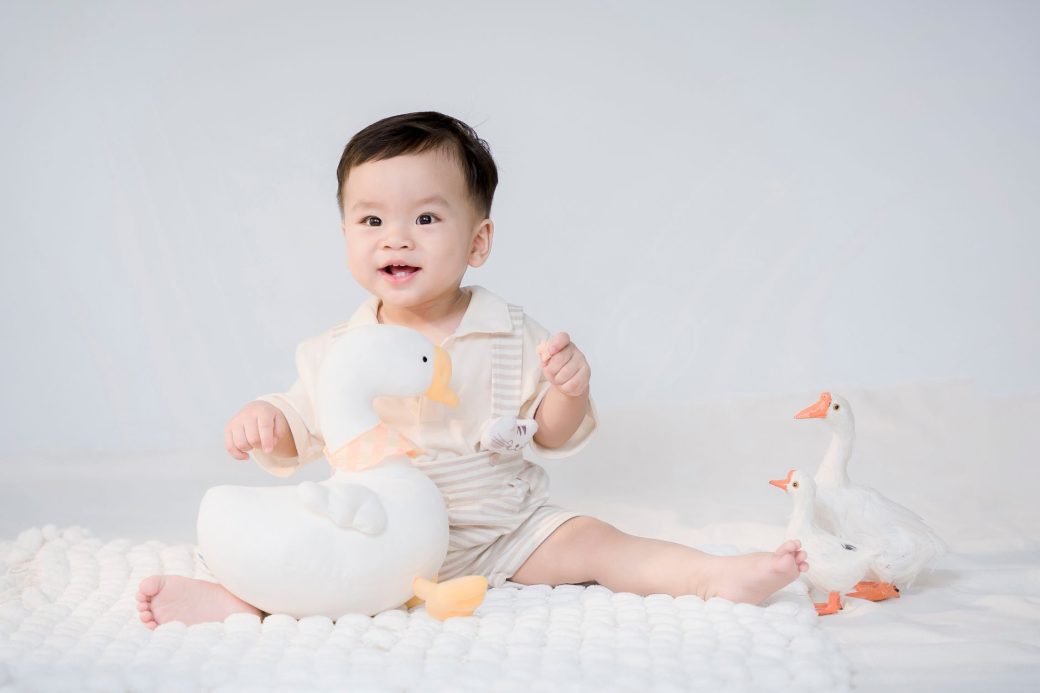
With the basics covered, narrow your choice by thinking about your own home and habits rather than the marketing on the box:
- Short on space? Favor toys that fold, nest, or store flat, and skip bulky activity centers.
- Want fewer batteries? Choose classic manual toys such as stackers, balls, and blocks that rely on your baby's own actions.
- Sensory-sensitive baby? Keep sound and light gentle, and lean on texture, weight, and simple shapes.
- Planning for more children? Invest in a few timeless, well-made pieces you can pass down, and buy trend toys secondhand.
Tip: Rotation is the quiet secret behind babies who seem endlessly entertained. Keep a handful of toys out and store the rest, then swap every week or two. Familiar toys feel new again, and you buy less overall.
Common mistakes to avoid
A few easy missteps show up in almost every nursery. Knowing them in advance saves money and frustration:
- Buying too far ahead. A toy for a much older stage sits unused and can be a hazard now. Buy for the next month or two.
- Chasing quantity. Too many toys at once overwhelms babies. A small, well-chosen set invites deeper play.
- Ignoring cleanability. Fabric toys with electronics inside are hard to wash. For anything that gets mouthed, easy cleaning is a feature.
- Skipping the age label. As noted above, that label is about safety, not just skill.
Frequently asked questions
A few questions come up in almost every conversation about first toys. Here are short, practical answers to help you shop:
- How many toys does a baby actually need? Fewer than you think. A handful of well-chosen basics that you rotate beats a bin overflowing with toys, which tends to overwhelm rather than engage a baby.
- Are wooden toys better than plastic? Neither is automatically safer. Look for solid construction, non-toxic finishes, and the right size for your baby's age. Quality wood lasts and resists cracking, while good silicone and plastic clean easily.
- When can my baby have soft or stuffed toys in the crib? Keep the sleep space clear of soft toys, pillows, and loose blankets in the first year to follow safe-sleep guidance. Save stuffed friends for supervised playtime.
- Do babies need electronic or "educational" toys? No. Simple open-ended toys and, above all, interaction with you drive the most development. Screens and battery-heavy gadgets are not necessary at this age.
- How do I keep toys clean? Wipe hard toys with mild soap and water, wash fabric toys per the label, and clean anything that gets mouthed regularly, especially during colds.
This is general information to help you shop with confidence, not medical advice. If you have concerns about your baby's development or play, check with your pediatrician or health visitor.
The right baby toys are the ones that fit your baby's stage, your space, and your budget, and that you can trust to be safe. Start with a few well-made basics, rotate them, and add pieces as your baby grows into new skills. When your little one reaches the newborn stage, our roundup of the best newborn toys and our baby play mat guide are the natural next reads.
Have a question or a topic to suggest?
We read every message. Tell us what you would like to see next on the blog.
Get in touchYou may also like
Best Newborn Toys in 2026: Tested Picks by Budget
The best newborn toys are simple, safe and matched to a brand-new baby. This buying guide covers what newborns can see and do, which types help, safety standards, features and price tiers by budget.
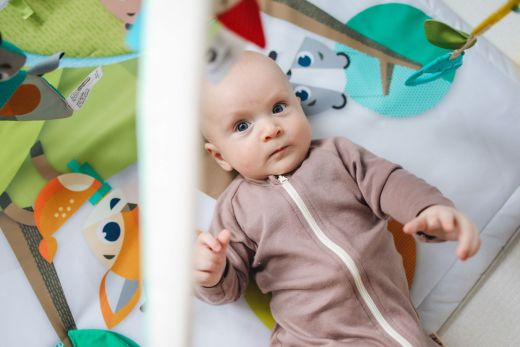
Baby Play Mat: The Complete Guide
Why a baby play mat matters, the main types, what to look for, and how to use it safely to support tummy time, rolling, and crawling through the first year.
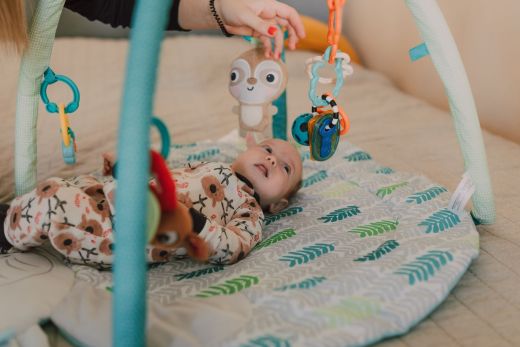
Newborn Play Mat: The Complete Guide
What a newborn play mat is really for, how it supports vision, motor skills and tummy time, which features to look for, and how to use one safely so early floor time truly helps your baby grow.