Toys & Play
Baby Play Mat: The Complete Guide
Types, why floor time matters, features to compare, safety, and use from newborn to toddler.
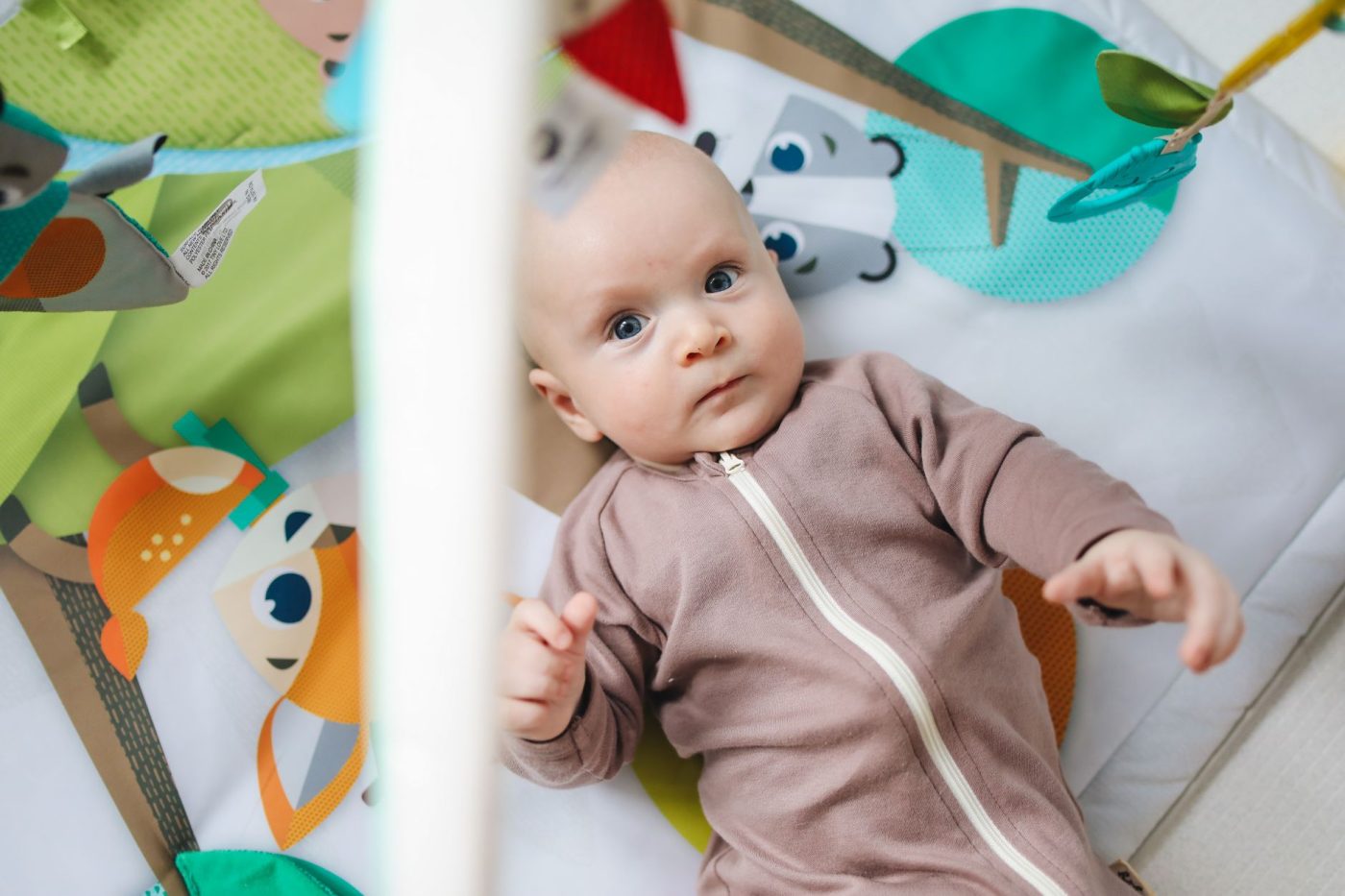
A baby play mat is one of the hardest-working pieces of gear in the early months. It gives your baby a clean, cushioned space to kick, reach, roll, and practise tummy time, and it gives you somewhere safe to set them down while you stay close. This complete guide explains the different types of play mat, what to look for, how a mat supports your baby's development, safety points that matter, and which well known models suit different homes and budgets.
Babiespedia is reader-supported. When you buy through links on our site we may earn a small commission, at no extra cost to you. We only feature products we believe parents will find genuinely useful.
What is a baby play mat?
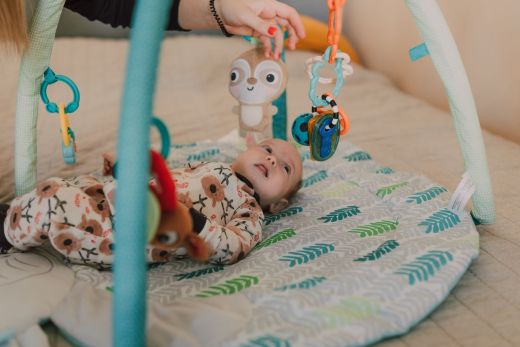
A baby play mat is a padded surface designed for floor play. Some are simple cushioned mats that protect your baby from a hard or cold floor, while others are activity gyms with an arch of hanging toys, lights, music, and textures. Both give your baby a defined, comfortable area to move and explore, which is exactly what young babies need for healthy physical development.
The two broad categories you will shop between are:
- Activity gyms: a soft mat with an overhead arch of dangling toys that encourage reaching, batting, and focusing.
- Foam or padded floor mats: larger cushioned mats, often interlocking tiles or a single roll-out pad, that create a safe play zone as your baby becomes mobile.
Why floor time matters for development
Time on a firm, flat surface is genuinely good for babies. It lets them move freely, build the neck, back, and core strength that supports rolling and sitting, and take in the world from a stable base. Supervised tummy time on a mat is one of the simplest ways to encourage motor development in the first year.
- Builds strength: pushing up during tummy time strengthens the neck, shoulders, and core.
- Encourages reaching and grasping: hanging toys invite your baby to swipe, track, and eventually grab.
- Supports free movement: unlike a seat or swing, a mat lets your baby move in every direction.
- Builds visual skills: high-contrast patterns and mirrors help early focusing and tracking.
For an overview of tummy time and early motor milestones, the American Academy of Pediatrics is a reliable, plain-language reference.
Tip: Start tummy time in short bursts of a minute or two, several times a day, from the first weeks, and build up as your baby gets stronger. A play mat with an overhead arch gives them something to look at, which makes those early minutes easier.
Types of play mat to compare
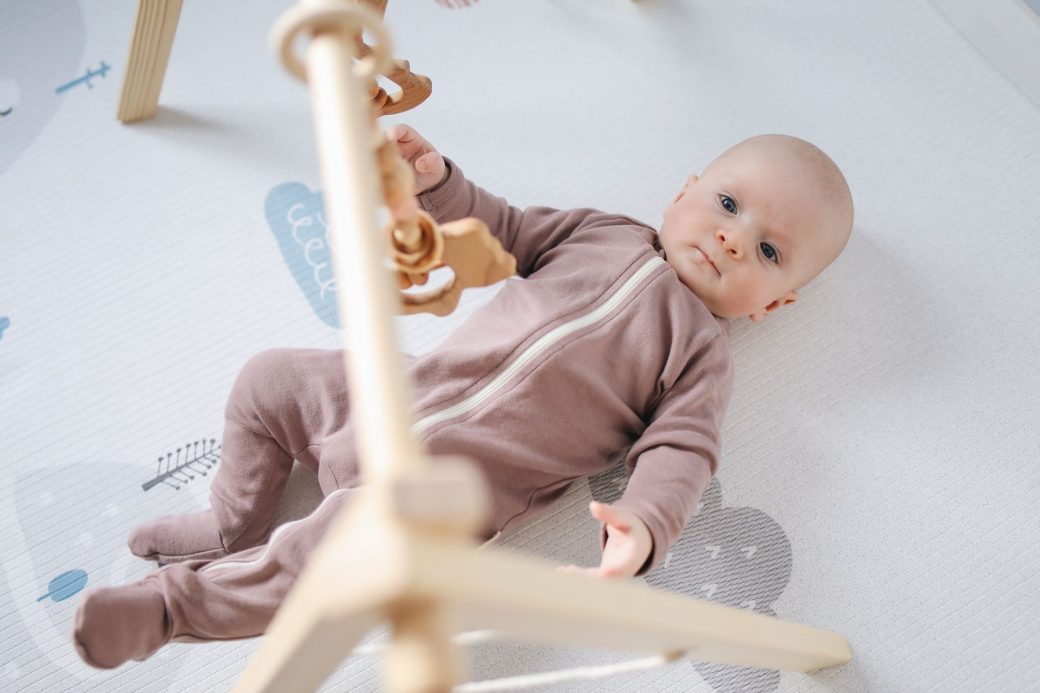
The best mat for your family depends on how your baby will use it and how much floor space you have. The main options include:
- Classic activity gyms: a plush mat with a toy arch, ideal from birth to the sitting stage.
- Musical and electronic gyms: add lights, sounds, and a kick-activated piano for extra stimulation.
- Convertible gyms: transform into a ball pit or sit-up play space as your baby grows.
- Foam tile mats: interlocking cushioned squares that expand to fill a room and cushion tumbles.
- Roll-up padded mats: a single thick, wipe-clean pad, often reversible with two designs, that stores easily.
Well known play mats worth considering
The mats below are widely stocked and cover the situations parents ask about most: developmental play, plush comfort, budget-friendly music and lights, a convertible design, and a large cushioned floor. Price tiers are general guidance, since actual prices move with sales and region.
| Product | Best for | Notable features | Price tier | Where to buy |
|---|---|---|---|---|
| Lovevery The Play Gym | Developmental play | Staged activities, wooden arch, high-contrast cards, teething toys | Premium | Check price |
| Skip Hop Silver Lining Cloud Activity Gym | Plush comfort and looks | Soft cloud design, hanging toys, tummy-time pillow, mirror | Mid-range | Check price |
| Fisher-Price Deluxe Kick and Play Piano Gym | Value with lights and music | Kick-activated piano, lights, sounds, removable toys | Budget | Check price |
| Infantino 4-in-1 Jumbo Activity Gym and Ball Pit | Growing with your baby | Extra-large mat, converts to a ball pit, multiple play stages | Budget | Check price |
| Baby Care Play Mat (foam) | Large cushioned floor space | Thick reversible foam pad, wipe-clean, non-toxic materials | Mid-range | Check price |
| Bright Starts 5-in-1 Your Way Ball Play | Long-term versatility | Converts through five play modes, toy arch, ball pit walls | Mid-range | Check price |
For most newborns an activity gym such as the Skip Hop cloud gym is the natural starting point, while a large foam floor mat becomes more useful once your baby starts rolling and crawling across the room.
What to look for when choosing
Compare mats on the practical details that affect comfort, safety, and how long you will actually use it:
- Cushioning: enough padding to protect from a hard floor without being so soft it wobbles under a new sitter.
- Easy cleaning: a machine-washable fabric mat or a wipe-clean foam surface saves you constant fuss.
- Safe materials: look for non-toxic, low-odour foam and fabrics that meet recognised safety standards.
- Detachable toys: removable, washable toys that a baby can safely mouth are a big plus.
- Size and storage: match the mat to your floor space, and check how easily it folds or rolls away.
- Grip: a non-slip backing keeps the mat in place on hard floors as your baby gets more active.
Play mat safety essentials
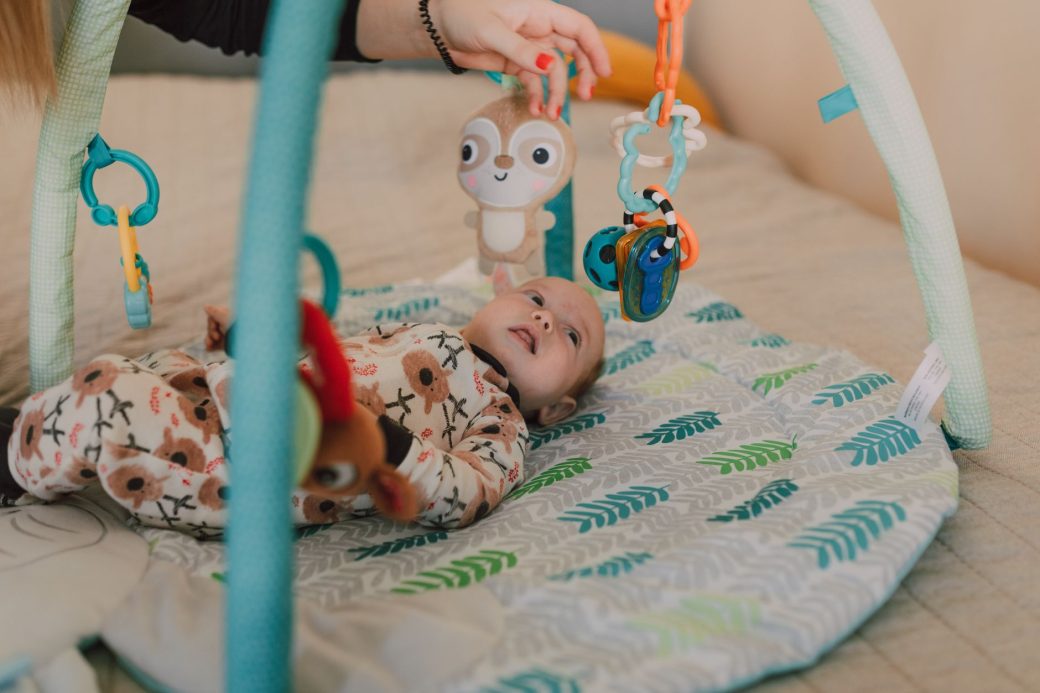
Play mats are low-risk when used sensibly, but a few habits keep floor time safe:
- Always supervise. A mat is for awake, watched play, not for sleep. Move a sleeping baby to a firm, flat crib on their back.
- Check hanging toys. Make sure arch toys are securely attached and have no small parts that could come loose.
- Keep cords and strings short. Nothing on or above the mat should be long enough to wrap around your baby.
- Air out new foam. Let a new foam mat ventilate before first use to clear any manufacturing odour.
- Place it away from hazards. Keep the mat clear of stairs, cords, and furniture your baby could pull on once mobile.
Tip: This article is general information, not medical advice. If you have concerns about your baby's movement or muscle tone, or your baby dislikes being on their tummy, mention it at your next check-up so your pediatrician or health visitor can take a look.
Getting the most from your mat by stage
A good mat can serve from the newborn weeks well into toddlerhood if you adapt how you use it:
- Newborn (0 to 3 months): short tummy-time sessions and gazing at high-contrast toys on the arch.
- Around 3 to 6 months: reaching, batting, and grabbing hanging toys, plus rolling practice.
- 6 months and beyond: sitting and playing with detached toys; a foam mat now cushions a new crawler exploring the room.
A play mat pairs naturally with other early-months gear. Compare our guides to the newborn play mat, infant play mat, and baby gym, and if you want a soothing seat for short breaks, see our baby bouncer guide.
Baby play mat FAQs
Here are quick answers to the questions parents ask most.
- When can my baby start using a play mat? From birth for supervised tummy time and gazing, building up as your baby grows stronger.
- Activity gym or foam mat? A gym suits the earliest months with its toy arch; a large foam mat is more useful once your baby is rolling and crawling. Many families own both over time.
- Can my baby nap on a play mat? No. Mats are for awake, supervised play. Move a sleeping baby to a firm, flat crib on their back.
- Are foam mats safe? Choose mats that meet recognised safety standards, air out new foam before use, and pick non-toxic, low-odour materials.
- How do I clean a play mat? Fabric gyms usually have machine-washable parts, while foam mats wipe clean with a damp cloth. Check the label for your specific model.
A baby play mat is a simple, affordable way to give your baby safe space to move, play, and grow. Pick a cushioned, easy-clean mat that suits your floor space, supervise every session, and let your baby set the pace. For more practical guides to the early months, browse the best baby toys guide or the wider Babiespedia blog.
Sources and further reading: American Academy of Pediatrics (HealthyChildren.org), U.S. Consumer Product Safety Commission.
Have a question or a topic to suggest?
We read every message. Tell us what you would like to see next on the blog.
Get in touchYou may also like
Newborn Play Mat: The Complete Guide
What a newborn play mat is really for, how it supports vision, motor skills and tummy time, which features to look for, and how to use one safely so early floor time truly helps your baby grow.
Infant Play Mat: The Complete Guide
A calm, practical guide to infant play mats: what they do, the main types, what to look for, safe use, and how floor play supports your baby's development.
Baby Gym: The Complete Guide
A complete guide to baby gyms covering what a play gym is, its developmental benefits, what to look for, safe supervised use, and how to adapt it by stage to keep your baby engaged and learning.