Toys & Play
Infant Play Mat: The Complete Guide
Types, features, safety essentials, and how floor play supports development from day one.
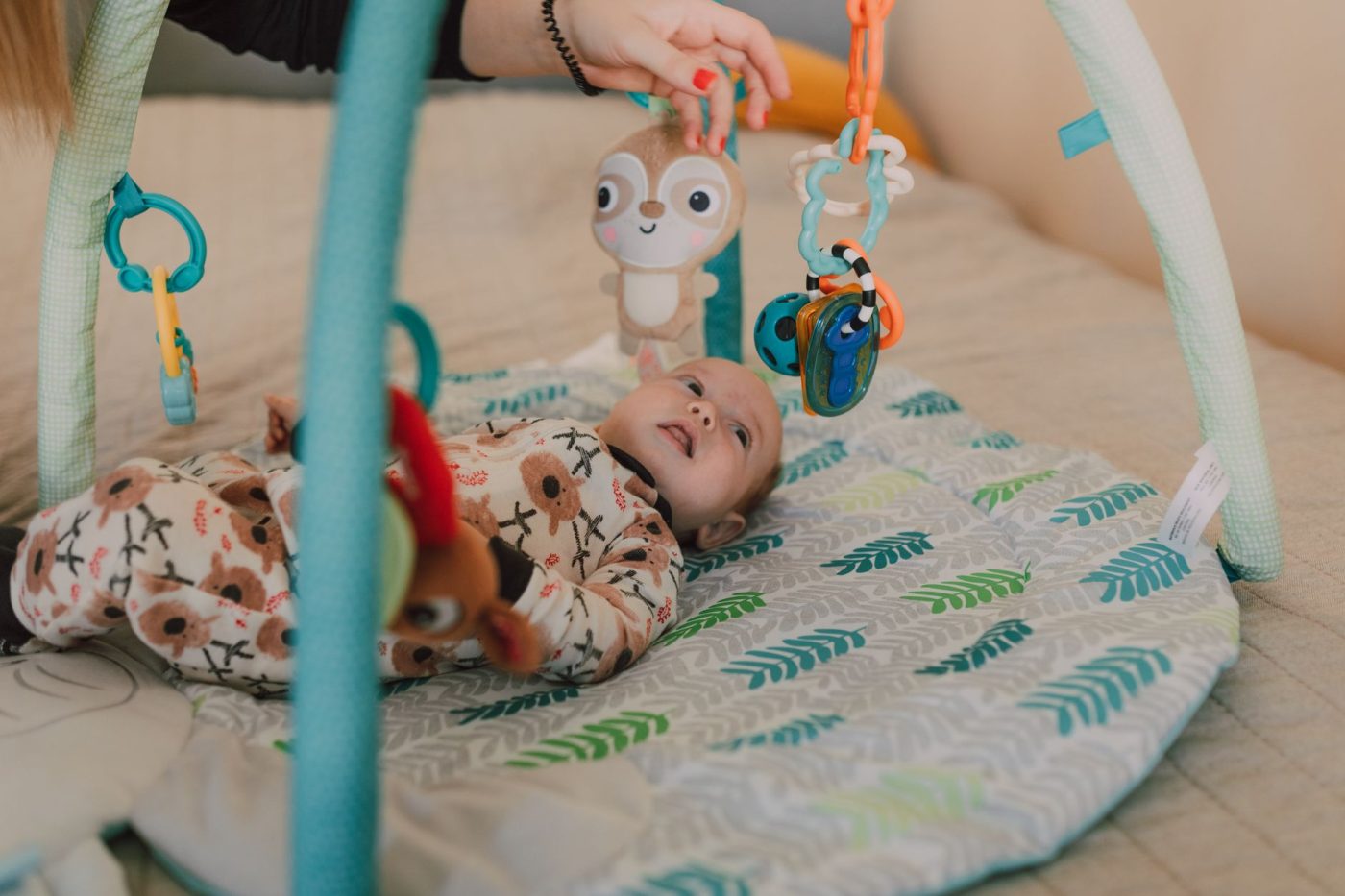
An infant play mat is one of the most useful pieces of gear in the first year: a soft, safe surface that turns the floor into a place your baby can stretch, reach, roll, and practise the movements that build strength and coordination. But mats range from simple padded squares to arching activity gyms with hanging toys, and the right one depends on your baby's stage, your space, and how easy it is to clean. This complete guide explains what an infant play mat does, the main types, the features that matter, safety and tummy time, and how to get the most out of it as your baby grows.
What an infant play mat is for
An infant play mat is a cushioned mat, often paired with an arch and dangling toys, that gives a young baby a clean, comfortable, stimulating spot for floor play. In the newborn weeks it is mostly a tummy time and back-lying surface; as your baby grows it becomes a base for reaching, batting, rolling, and eventually sitting.
- A safe floor base. Padding softens a hard floor and defines a clean zone for play away from household hazards.
- Early development. Reaching for hanging toys builds hand-eye coordination, while tummy time strengthens the neck, shoulders, and core.
- Sensory stimulation. Contrasting colors, textures, mirrors, and crinkle or rattle sounds give a young baby plenty to explore.
Types of infant play mat
Play mats come in several formats, and the best one depends on your baby's age and how you want to use it. Here are the common styles you will see:
- Activity gyms. A padded mat with an overhead arch and hanging toys. Ideal for the newborn-to-sitting stage, encouraging reaching and batting from the back.
- Simple padded mats. A plain quilted or foam mat with no arch. Versatile for tummy time and later floor play, and easy to fold or roll away.
- Foam tile mats. Interlocking cushioned tiles that cover a larger area. Great once baby is crawling and cruising, and reconfigurable to fit your room.
- Playmat and gym combos with sensory features. Mats that add mirrors, textures, teethers, and music for extra stimulation.
- Travel and roll-up mats. Lightweight mats that pack down for trips, grandparents' homes, or the park.
Tip: For the newborn-to-six-month window, an activity gym gives the most engagement, since your baby spends a lot of time on their back and can bat at the hanging toys. Once your baby is crawling, a large foam tile mat becomes far more useful for safe, roomy floor play.
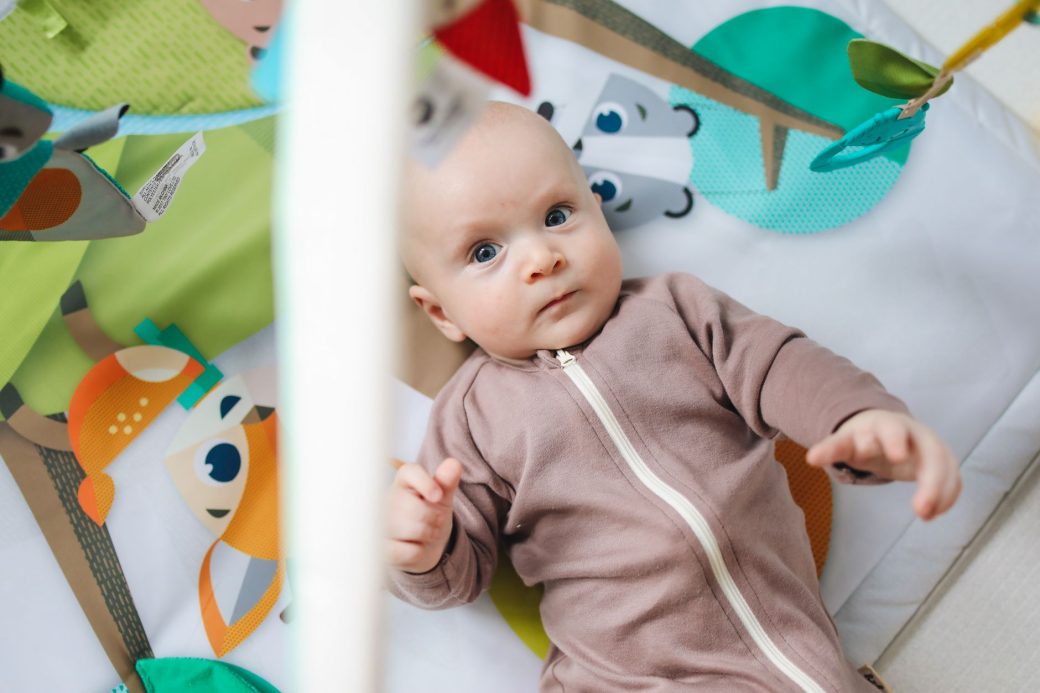
Play mat types at a glance
This quick reference matches the common mat types to the stage they suit best and the features to expect, so you can see which format fits your baby right now:
| Mat type | Best for | Notable features | Price tier |
|---|---|---|---|
| Activity gym with arch | Newborn to sitting (0 to 6 months) | Hanging toys, padded mat, sensory features, encourages reaching | Budget to Mid-range |
| Simple padded or quilted mat | Tummy time at any stage | Plain cushioned surface, folds or rolls away, easy to clean | Budget |
| Interlocking foam tile mat | Crawling and cruising (6 months and up) | Large cushioned area, reconfigurable, protects against bumps | Mid-range |
| Sensory combo gym | Extra stimulation | Mirror, textures, teethers, lights or music, contrast patterns | Mid-range to Premium |
| Travel roll-up mat | Trips and visits | Lightweight, packs small, wipe-clean surface | Budget |
Ready to shop a specific type? You can compare current options for a baby activity gym or an interlocking foam play mat to see what fits your space and budget.
What to look for when choosing
Once you have a type in mind, compare mats on the practical features that affect safety, longevity, and day-to-day ease:
- Adequate padding. Enough cushioning to be comfortable on a hard floor, without being so soft it is unstable for tummy time.
- Non-toxic, low-odor materials. Look for mats free from known harmful chemicals, and air out a new foam mat before use.
- Easy cleaning. A wipe-clean or machine-washable surface is invaluable given spit-up, drool, and spills.
- Engaging, safe toys. Removable, washable hanging toys with high-contrast patterns and varied textures, with no small parts that could detach.
- Size and storage. Match the mat to your floor space, and check how easily it folds or packs away.
- Grip. A non-slip backing keeps the mat from sliding on hard floors.
Tummy time and safe use
A play mat is the natural home for tummy time, the supervised practice of lying your baby on their front while awake. Health bodies including the American Academy of Pediatrics recommend starting short sessions from the early days and building up as your baby gets stronger.
- Start small and build. Begin with a few minutes at a time, several times a day, and extend as your baby tolerates it.
- Always supervise. Play mats are for awake, supervised play only, never for sleep. If your baby falls asleep, move them to a firm, flat sleep surface such as a crib or bassinet on their back.
- Get down with them. Lying at their level or using a mirror encourages a reluctant baby to lift their head.
- Keep it clear. Remove any loose or extra padding, and make sure hanging toys are securely attached.
This article is general information, not medical advice. For guidance on tummy time and reaching milestones, see the American Academy of Pediatrics and the CDC's developmental milestone resources at CDC.gov. If you have concerns about your baby's movement or development, speak with your pediatrician.

Using the play mat by age and stage
A good mat adapts through the first year, and knowing the stages helps you keep play engaging and useful the whole way through:
- Newborn (0 to 3 months): back-lying under an activity arch to gaze at contrast toys, plus short, supervised tummy time to build neck strength.
- Reaching and rolling (3 to 6 months): batting and grabbing hanging toys, and rolling practice on a roomy, padded surface.
- Sitting and crawling (6 months and up): a larger foam mat gives safe space to sit, pivot, and crawl, often with toys placed just out of reach to encourage movement.
As your baby grows, a play mat leads naturally into wider floor play and toys. Our guides to the best baby toys and the baby gym pick up where the mat leaves off, and for the smallest babies our newborn play mat guide goes deeper on the earliest weeks.
Infant play mat FAQs
A few questions come up again and again from new parents, so here are short, practical answers:
- When can my baby use a play mat? From birth, for supervised back-lying and short tummy time. Engagement grows quickly over the first few months.
- Can my baby sleep on a play mat? No. Mats are for awake, supervised play only. Always move a sleeping baby to a firm, flat sleep surface on their back.
- Foam or fabric? Fabric activity gyms suit the early months and are cozy for tummy time; interlocking foam tiles suit crawling babies and larger spaces.
- How do I clean it? Check the label. Many fabric mats are machine washable and most foam mats wipe clean, which matters given daily messes.
- Is a play mat worth it? For most families, yes. It gives a safe, stimulating base for the floor play that drives early motor development.
An infant play mat is a small purchase that earns its keep every single day of the first year, giving your baby a safe, engaging place to grow stronger and more coordinated. Choose one that suits their stage and your space, keep tummy time supervised, and let the floor become their favorite playground. For more on early development and gentle routines, browse the guides on the Babiespedia blog.
Sources and further reading: American Academy of Pediatrics (HealthyChildren.org), Centers for Disease Control and Prevention.
Have a question or a topic to suggest?
We read every message. Tell us what you would like to see next on the blog.
Get in touchYou may also like
Newborn Play Mat: The Complete Guide
What a newborn play mat is really for, how it supports vision, motor skills and tummy time, which features to look for, and how to use one safely so early floor time truly helps your baby grow.
Baby Play Mat: The Complete Guide
Why a baby play mat matters, the main types, what to look for, and how to use it safely to support tummy time, rolling, and crawling through the first year.
Best Baby Toys in 2026: Tested Picks by Budget
A practical buying guide to the best baby toys: what to look for, safety standards, how to choose by age and stage, and what your money buys at each price tier.