Complete Guide
Montessori School: The Complete Guide
Beyond the wooden toys: how Montessori really works, its benefits and trade-offs, and how to spot an authentic school.
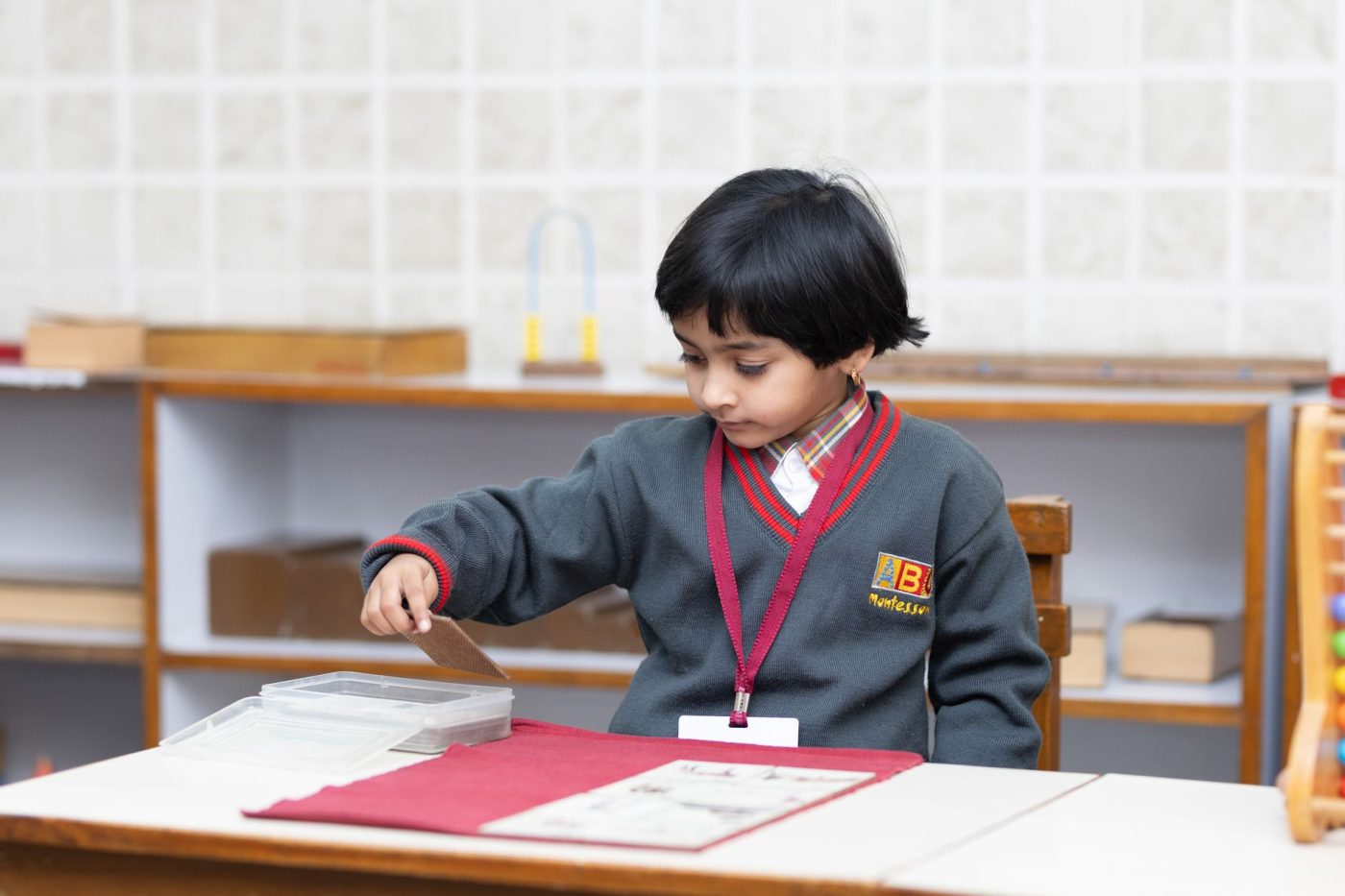
Montessori is one of the most recognised names in early education, yet it is often misunderstood. Some parents picture wooden toys and calm classrooms; others wonder whether it is too loose, too rigid, or simply worth the fees. This complete guide explains what a Montessori school actually is, how the approach works, its strengths and trade-offs, how to spot a genuine setting, and which affordable materials let you bring the ideas home.
Babiespedia is reader-supported. When you buy through links on our site we may earn a small commission, at no extra cost to you. We only feature products we believe parents will find genuinely useful.
What a Montessori school is
Montessori education is an approach developed by Dr Maria Montessori, an Italian physician and educator, in the early twentieth century. It is built on the idea that children learn best through hands-on, self-directed activity in a carefully prepared environment, with adults guiding rather than lecturing.
- Child-led learning: children choose their own activities from a structured range and work at their own pace.
- Prepared environment: the classroom is set up so materials are accessible and ordered, inviting independent exploration.
- Specialised materials: tactile, self-correcting equipment teaches concepts through the hands as well as the mind.
- Mixed-age classes: children of a two or three-year age span learn together, so younger ones learn from older peers.
Montessori is one route within the wider world of early learning. Our early childhood education guide and preschool guide set it in context.
How the Montessori approach works day to day
A Montessori classroom looks and sounds different from a conventional one. Instead of a teacher leading the whole group through the same lesson, children move between activities they have chosen, often working alone or in small groups for long, uninterrupted stretches.
- Long work periods: extended blocks of time let children concentrate deeply without constant interruption.
- Freedom within limits: children choose freely, but within clear ground rules that protect focus and respect.
- The teacher as guide: adults observe, introduce materials at the right moment, and step back so children can discover.
- Practical life skills: pouring, tidying, buttoning and food preparation build independence and coordination.
Tip: When you visit a Montessori classroom, watch the children rather than the walls. In a healthy setting you should see calm, purposeful activity, children choosing and finishing tasks, and adults quietly guiding rather than commanding the room.
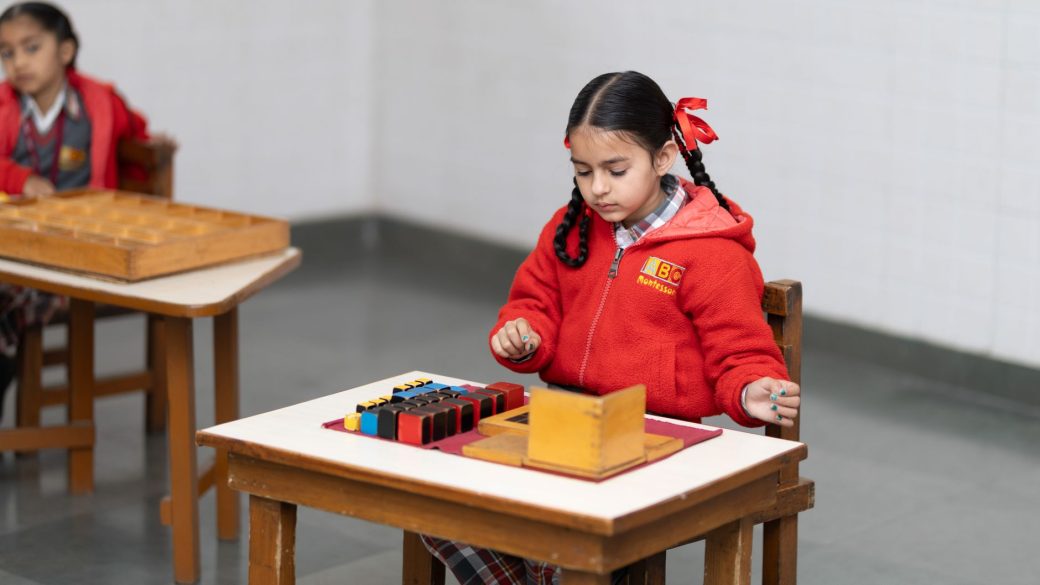
The core areas of a Montessori classroom
Traditional Montessori environments, especially for the three-to-six age group, are typically organised into distinct learning areas. Each uses specific materials designed to isolate one concept at a time.
- Practical life: everyday tasks that develop concentration, order and independence.
- Sensorial: materials that refine the senses, such as grading colours, sizes and textures.
- Language: sandpaper letters and movable alphabets that build reading and writing through touch and sound.
- Mathematics: beads, rods and other concrete tools that make abstract number ideas visible.
- Cultural studies: geography, science, art and music that open up the wider world.
Potential benefits of a Montessori education
Many families are drawn to Montessori for the qualities it aims to nurture. Outcomes always depend on the individual child and the quality of the specific school, but the approach is designed to encourage a recognisable set of strengths.
- Independence: children learn to make choices, manage their time and look after their space.
- Intrinsic motivation: learning driven by curiosity rather than grades or rewards.
- Concentration: long work periods help children build genuine focus.
- Social skills: mixed-age groups encourage cooperation, mentoring and empathy.
- Love of learning: the aim is a child who enjoys learning for its own sake.
The World Health Organization nurturing-care framework and the CDC developmental milestones both underline how much responsive, hands-on experience supports young children, whatever the label on the classroom.
Trade-offs and things to weigh
Montessori is not automatically the right fit for every child or family, and being honest about the trade-offs helps you decide well.
- Cost: authentic programmes with trained staff and specialist materials often carry higher fees, though provision varies by region.
- Fit with the child: some children thrive on the freedom; others do better with more external structure.
- Transition to conventional school: most children adapt well, but the shift in style is worth thinking about.
- Uneven quality: the name is not legally protected in many places, so standards differ widely between schools.
Tip: Because "Montessori" is often unprotected, treat the label as a starting point, not a guarantee. Ask about teacher training, association membership and how closely the school follows Montessori principles before you commit.
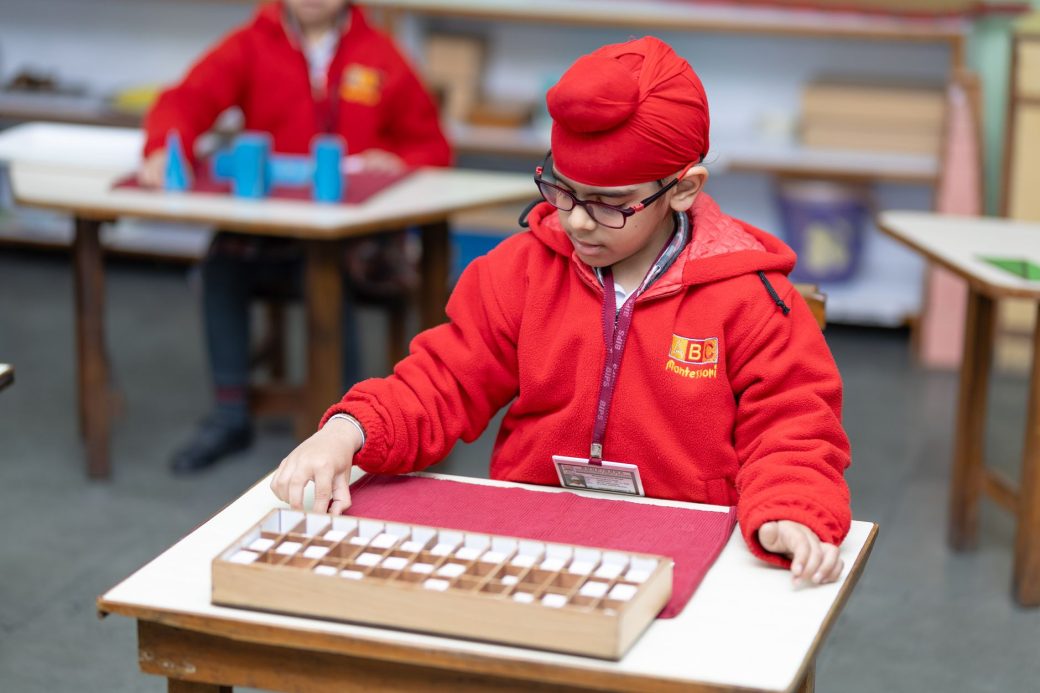
How to choose a genuine Montessori school
If the approach appeals to you, the quality of the individual school matters far more than the sign over the door. A few practical checks help you separate authentic settings from those using the name loosely.
- Teacher credentials: ask whether teachers hold recognised Montessori training.
- Recognised affiliation: membership of an established Montessori organisation is a useful signal.
- Authentic materials and environment: look for the classic prepared classroom and specialist materials in real use.
- Mixed-age grouping: genuine settings usually keep the two or three-year age spans.
- Observe a session: spend time watching how children and adults actually interact.
- Ask about their philosophy: a good school can explain clearly how it applies Montessori principles day to day.
Bringing Montessori ideas home
You do not need a Montessori school, or a house full of expensive equipment, to use the ideas at home. Much of the philosophy translates into simple, low-cost habits and a few well-chosen materials that support independence and focus. The items below are widely available and popular with Montessori-minded families. Prices vary by set and retailer, so we describe each by tier rather than a fixed number.
| Product | Best for | Notable features | Price tier | Where to buy |
|---|---|---|---|---|
| Melissa & Doug Wooden Knob Puzzles | Fine motor and early language | Self-correcting shapes, chunky knobs, solid wood | Budget | Check price |
| Object Permanence Box with Tray | Babies and young toddlers | Classic Montessori infant material, cause and effect play | Budget | Check price |
| Wooden Stacking and Nesting Set | Order, size grading and sequencing | Open-ended, natural finish, encourages independent play | Budget | Check price |
| Child-Size Practical Life Cleaning Set | Practical life and independence | Real working broom, mop and dustpan sized for a child | Mid-range | Check price |
| Sandpaper Letters and Movable Alphabet | Pre-reading and writing | Tactile letters and phonics-based movable alphabet | Mid-range | Check price |
| Lovevery-Style Montessori Play Kit | Age-staged, ready-made play | Curated wooden toys matched to developmental stages | Premium | Check price |
Alongside these, simple habits cost almost nothing: keep toys limited and displayed on a low shelf, offer real tasks like pouring water or laying the table, and step back so your child can try, struggle and succeed. For more open-ended play ideas, see our best baby toys guide, or browse current Montessori toys on Amazon .
How Montessori compares with other approaches
Montessori is one of several respected early education philosophies, and understanding the alternatives helps you see where it fits. None is objectively superior; each emphasises different things.
- Montessori: child-led, self-paced work with structured materials in a prepared environment.
- Reggio Emilia: project-based and creative, driven by children's interests and expression.
- Waldorf or Steiner: imaginative play, rhythm and a slower introduction of formal academics.
- Play-based settings: learning primarily through free and guided play, common in many mainstream nurseries.
- Traditional academic: more teacher-directed lessons and earlier formal instruction.
The best choice depends on your child's temperament and what you value, so it is worth visiting a couple of different styles before deciding. Our early childhood development guide can help you match an approach to where your child is now.
Montessori school FAQs
Parents weighing up Montessori tend to ask a similar set of questions.
- What age is Montessori for? Montessori spans infancy through the teenage years, but it is most common and best known for children roughly aged three to six.
- Is Montessori better than traditional school? Neither is universally better. Montessori suits children who thrive with independence and hands-on learning; some children do better with more conventional structure.
- Is Montessori only for gifted children? No. The approach is designed to meet a wide range of children where they are, at their own pace.
- Will my child struggle to switch to a normal school later? Most children transition smoothly, carrying over independence and focus, though the change in teaching style takes some adjustment.
- Is any school called Montessori a real Montessori? Not necessarily. The name is often unprotected, so check teacher training, affiliations and how faithfully the school follows the method.
A strong Montessori school can be a wonderful start for a curious, independent child, but the real difference lies in the quality of the individual setting rather than the name alone. Visit, observe, and ask direct questions until you feel confident it fits your child. For more guidance on early learning and choosing childcare, explore the guides on the Babiespedia blog.
Sources and further reading: CDC developmental milestones, World Health Organization nurturing care.
Have a question or a topic to suggest?
We read every message. Tell us what you would like to see next on the blog.
Get in touchYou may also like

Early Childhood Education: The Complete Guide
A clear guide to early childhood education: what it means, why the early years matter, the key areas of development, common approaches, and how to support learning at home.
Preschool: The Complete Guide
A calm guide to preschool: what it is, what happens in a day, the benefits, signs your child is ready, how to choose a good setting, and helping them settle in.
Early Childhood Development: The Complete Guide
Early childhood development covers how babies and young children grow, learn and connect. This guide explains the main areas, how they unfold by stage, and simple everyday ways to support your child.